Wednesday, 5 September 2018

The New World

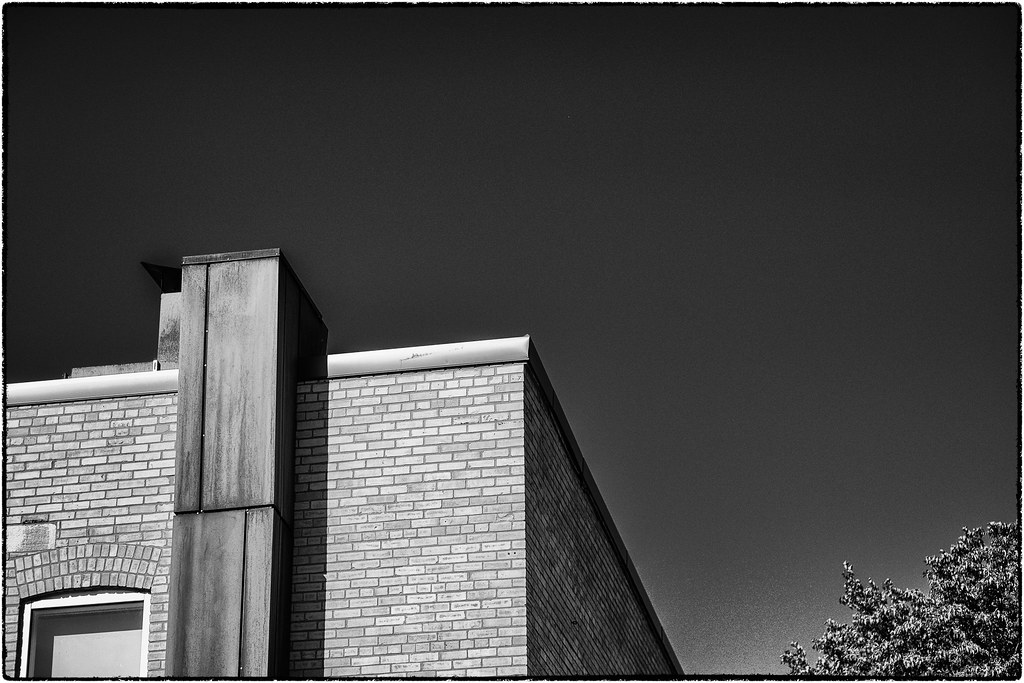
Rust, Brick and Blue Sky
Sony A7mII, Zeiss ZF.2 1,4/85 Planar


So we've seen Nikon and Canon drop new mirrorless systems in the last two weeks, with somewhat different approaches.

Nikon's Z series essentially targets the two most successful Sony's (the A7 and A7R models) directly, matching each variation with one of their own, and coming in somewhere between the mkII and mkIII revisions. Nikon clearly targeted the mkII Sony's and beat them in pretty much all regards, although the mkIII's have some advantages (battery life, AF, dual card slots.). Nikon's lens choices are both safe and sane, mirroring 3 of Sony's original lenses with slightly better thought out choices. The 50/1.8 is cheaper than the ZA 55/1.8, while it looks to be comparable or better, and the 35/1.8 may be larger than the ZA 35/2.8, but it's both cheaper and faster, a win (Sony users have long lamented the lack of a relatively compact but fast 35, the tiny but slow & pricey 35/2.8 is largely unappreciated by Sony users). The 24-70/4 again matches a Sony launch lens, but hopefully will be better than the underwhelming ZA 24-70/4. And then there's the 58/0.95. It's manual focus, it's stupidly fast and it's huge. It may just be the first Otus-beater. With the largest & shortest-register mount, IBIS included and the Z series inheriting the non-CPU lens data interface from the Nikon DSLR's, these will probably become the new standard for manual lens use. Nikon delivers 1 adapter with a stop-down lever but no screwdriver AF support, it should prove popular since Nikon has a great lineup of AF-S lenses for it. Nikon chose 1 XQD slot, again targeting the single-slot Sony mkII's, but avoids the performance slowdown inherent to the second SD slot in the D850 and D500.

Canon on the other hand played it safe on the body, delivering an overpriced & underwhelming product that will no doubt be a very competent camera. It really reminds me of the 6D's, a pair of overpriced and underwhelming FF DSLR's that nonetheless actually work pretty well for a lot of people. The EOS R is largely a mirrorless 5DIV, with a UI that's a mix of EOS DSLR and the EOS-M mirrorless line. And it introduces Canon's third current mount in R mount, leaving them with 4 mounts, each of which has a measure of EF compatibility, but little cross-compatibility (while EF-M mount supports EF and EF-S lenses via adapter, it's a dead end otherwise, with no R mount compatibility). Lenses are pretty much a 1 of each set, with a prosumer zoom (24-105/4), prosumer prime (35/1.8 IS), pro prime (50/1.2L) and ridiculous halo lens (28-70/2L). However Canon gets significant AF limitations (5fps max in AI Servo, 3fps with tracking, vs 8fps+ for Nikon and Sony) and becomes the only player without IBIS. Video is also 1.7crop for 4K, making this the worst option of the three, especially with the A7SmIII expected to drop in the next 6-8 weeks and the price is $300 more than the A7III and Z6's $2K USD. Canon chose a single UHS-II SD slot, lacking Sony's dual slot for reliability as well as Nikon's XQD speed advantage. Canon does bring 3 adapters, a cheap but fully-functional straight adapter, a second more expensive one with the control ring from the RF lenses integrated and a third with a filter holder integrated. The last should be copied by others, it's a great idea.

The end result is today I think the Sony MkIII's remain the market leaders overall. Nikon IMHO is the clear second here, with a well thought out pair and a solid lens lineup, with a clear roadmap.

Canon I think dropped the ball. Their body is in a lot of ways the least of the 3 ~$2k bodies for the most money and their lenses are pretty much a scattergun approach. While I could readily see a Nikon user buying all 3 of the Nikon lenses at launch, Canon will do well to sell 2, as most who want the fast 50 won't want the small 35 and vice versa.

Tuesday, 10 July 2018

Misleading

Misleading 
A7II, Zeiss ZF.2 1,4/85 Planar


Not the post, just the sign. Very nice little corner garden but a little light on the flowers

Tuesday, 26 June 2018

It's Not The Gear

The Creek 
D200, Sigma 10-20mm f4-5.6


I've a tendency to focus on gear, largely because I'm still searching for the camera/system that truly fits me perfectly. I've not found it yet, although the A7II is working well.

But the reality is pretty much any DSLR or Mirrorless body from the last 10 years can produce more than acceptable work for 90% of situations. Maybe not in the real edge cases, where you need the speed, high ISO capability or some other aspect of the newer, higher-end bodies, but otherwise any reasonably skilled photographer can deliver the goods with most anything.

That's worth calling out, because too many chase the latest & greatest because it's 'Better'. But most only actually need 'Good Enough'. If you're looking to upgrade something, the first question that should be asked is 'what will it give me that my current body can't?'

For me, with both my upgrades this year, I'd had that pretty much nailed down.

When I got the D800, it was going to give me better compatibility with my manual focus lenses than my D300 did (specifically the angle of view & rendering I expected). I was also gaining high ISO performance (significant) and dynamic range (less important but still quite useful for a landscape/cityscape shooter like myself). It delivered on all three expectations, and also proved to be generally a better DX camera than the D300, which I didn't expect.

When I swapped the D800 for the A7II, it was to give me a better hit rate when manual focusing, as well as a smaller, lighter carry kit when not using my Zeiss 85/1.4. It's also delivered in spades.

So if you're looking at the shiny new toy, be sure you know what you're going to get. The quickest way to be disappointed in your new camera is to have unrealistic expectations of what it can deliver.

Wednesday, 20 June 2018

Lost Crown

Lost Crown
A7 II, Zeiss ZF.2 1,4/85 Planar


This image hit Explore on Flickr recently and is a great example of what I love about the 85 Planar's rendering. Such a lovely lens.

Monday, 18 June 2018

First Takes on the A7 II

The Vent 
A7 II, 28/3.5 H


The above shot I'd never have gotten with the D800. Just too hard to get reliable focus with the 28/3.5 H.

The A7 II is really a mixed bag for me. It's a little odd, as it's a camera with a whole lot of issues, but very few of the problems get in my way.

What's wrong with it? Well the menu's are a mess, battery life is terrible, there's a few things at the firmware level that it should do but doesn't, the button layout is adequate at best and it's really not all that refined.

However for me, and how I shoot, there's really only 3 issues.

1. Terrible battery life (solved with A7 III). The small (1050mAh) battery combined with how power hungry mirrorless bodies inherently are gives a 3-400 shot battery life (vs around 900-1000 with the D800). The larger Z series battery in the A7 III solves this, but a few extra 3rd party batteries get me enough life for it to be a non-issue in practice.

2. Overly-sensitive EVF/LCD auto-switching. This is a problem for a couple reasons. The first is that it makes waistlevel shooting an issue unless I manually set it to LCD, which I can only do in the menu (no way to assign this to a button, unlike the NEX-7 or the SLT bodies). The second is that the detector keeps the camera awake, meaning I need to hold the camera in a particular way for it to go to sleep (and preserve precious battery). The A7 III solves the first (it disables the sensor when the LCD is flipped out) but not the second.

3. Card formatting. I can deal with all the rest of the 'buried in random menu section' issues, but reformatting cards is a right PITA. For now I've solved that largely by a change in import workflow, I'm now using the option to delete on import completion to eliminate the need for formatting in-camera.

Admittedly the fact it doesn't write IBIS focal length to metadata is annoying, but not really a show-stopper (Nikon gets this more right with Non-CPU lens data settings)

Now what's right about the camera?

For me, there's a lot.

1. Size. With my smaller lenses I get a much smaller/lighter package than the D800 was. This is a big deal for me given my right shoulder issues. I have problems carrying heavy kit in my right hand. And it just doesn't scream 'Pro with Camera' like the D300 and D800 do.

2. Focusing. While it's not perfect, I can much more reliably hit focus manually with the A7 II than a DSLR. This is most notable with the 85/1.4, but a big deal with both the 28/3.5 and the 300/4.5 as well. After trying the 300 on the A7 I was surprised that I was getting acceptable results, which I didn't on either the D800 or the D300. It by no means makes the 300/4.5 into a great lens, but it's surprisingly usable at f8, to the point where it's likely to actually get used semi-regularly (it got one test run on both the D800 and D300). I tend to use a mix of both peaking (for faster shots) and magnification for focusing. Peaking gives a hit rate around 75% or so with my most difficult setup (ZF.2 85@f2-2.8) while magnification is around 95% (beating <50% with the OVF+AF Confirm on the D800).

3. Seeing exposure. You get a pretty decent preview of your exposure in the EVF and LCD. I find the LCD not really useful for fine exposure tuning, but it's good in the EVF. And of course I can always bring up a live histogram to get an even better idea of what I'm dealing with.

4. Flip-out LCD. So useful for low-angle and high-angle shots that are really just a guessing game with most DSLR's, especially since the LV experience is wildly better with any mirrorless than a DSLR.

So overall, the A7 II is decidedly less well sorted than the D800, but very well sorted for my uses. I'm quite happy with it and hope to keep shooting it for the foreseeable future.

Friday, 15 June 2018

Updates

The Bun 
A7II, Zeiss ZF.2 T* 1,4/85 Planar


First a quick shooting update. I passed 4000 shots for the year at the end of May and am now less than 1000 shots under what I shot in 2014, the last year before my shooting collapsed. And I continue to actively shoot several times a week. I'm very happy with this and expect the full year will bring me back to my typical 10k or so shots for the year. Mostly it's walkabout shooting city & macro work, but a little nature & street too.

That said, I became increasingly frustrated with the D800. Not because it's not a great camera, but for two other reasons.

1. It's heavy. It's just too large & heavy for regular walkabout days of shooting. It's fine when I'm carrying the full kit and headed out for some serious shooting (since a bag full of lenses weighs a lot more than 1 body), but it's a pig for days when I just want to throw the 50/1.8 or 55/3.5 and go explore.

2. Increasing frustration in using the 28/3.5 and 85/1.4 on it, especially the latter. The 28 is one lens I just could not get to work well on the D800, although I knew from my film bodies that it was actually pretty good. The low contrast wide open was just too much of a challenge to use with the D800's somewhat sketchy AF confirm. The focus shift on the 85/1.4 made focusing wider than f4.5 a crapshoot unless I was wide open. A pity, since I love the results at f2-2.8 when I hit focus.

The NEX-7 could solve the first one, which is why I traded a D300+lenses for it. For the second it was either replace the lenses or the body. And I'm almighty fond of my Zeiss 85, regardless of its flaws.

But a week after I bought the NEX-7, I found a Sony A7II in the same store for an irresistible price. So after some deliberation, I returned the NEX-7 and traded in the D800 for the A7II, and came out cash even (actually, a little ahead, but I bought a spare battery for the A7II, since I know it's bad on batteries).

This nets me a main camera light enough to do light carry with my smaller lenses, and with the ability to accurately focus my 85/1.4 at working aperture. The above picture was at f2.8 with the Zeiss 85 and focus is dead on. That shot would have been a complete gamble on the D800 but focus peaking & EVF magnification made it dead easy on the A7II. As much as I like the OVF view, focus accuracy is more important.

Overall I shot just shy of 3000 shots on the D800. And I loved shooting it, I just didn't love coming home to 50% out of focus shots. don't get me wrong, it's actually a great camera (and IMHO a better overall camera than the A7II for most applications), just for my uses and lenses, the A7II can deliver in focus shots where the D800 cannot for reasons that really are the fault of the lenses in question, and that seals the deal. Bodies come and go, but lenses are the core of the system. As a bonus, I now have a body for my beloved Nikkor-S.C 5cm f1.4 LTM lens. That's my cold dead hands lens, and I've not had a good body for it in several years.

Oh, and I get IBIS (stabilization) for all my lenses.

So for now I'll have the A7II with adapted F mount glass as my main camera, and the D300 for speed/beater usage. We'll see how things evolve from here. I'm not planning any investments, so far everything's really been just horse-trading. I've been lucky in that.


Wednesday, 13 June 2018

A Brief Sojourn - NEX-7

Burst of Purple 
NEX-7, E 18-55mm f3.5-5.6 OSS


A couple Friday's ago I traded one of my D300's as well as my 10-20 and 35/1.8DX in on a NEX-7.

Why? Well, I needed a light carry body and hadn't been seeing what I wanted show up in Nikon mount. The NEX-7 is another body I used to own and got along with very well and I found a great deal on one with the 18-55 kit lens.

So I did the trade. And then I spent a week shooting with it, clocking 244 exposures during that week.

It reminded me mostly of what I liked about the body. Sure the AF is pedestrian, the high ISO performance marginal and the battery life on the short side, but it handles well, has a nice viewfinder and rear LCD, great focusing aids and the low & mid ISO performance is excellent even by today's standards.

In particular, the control dial setup is IMHO better than the newer A6x00 bodies (I see little need for  a mode dial over having an extra control wheel).

I could be pretty happy with the NEX-7 as my light carry camera, complementing the D800 (serious shooting camera) and D300 (speed/beater).

That didn't happen, as I ended up returning the NEX-7 in favour of something else. The answer to that riddle is coming Friday.