Showing posts with label Alt Glass. Show all posts

Thursday, 27 October 2022

And I’m Back, with a switch


Olympus OM-1, m.Zuiko 12-40 Pro f2.8 II

This year has been pretty dead for me in terms of shooting, not because of a lack of desire, but a combo of too busy with work (I was pretty much flat out from May onwards), high gas prices, actively RC flying in my rare free time (the field is close, good landscapes are not) and just a general desire to hole up at home rather than go out. 

That said, I did get out a couple times and got a small selection of good shots. 

I’ve got my brain going off on gear again as well. I do miss a lot from the m43 system, especially the 12-40 Pro, the IBIS and the automation, LiveND especially. I do really like the A7RIV, but the two real gaps in the Sony lens lineup are a compact and close focusing 24-xx zoom and a good 70-200/4 options. There are alternative solutions though, the Tamron 70-180/2.8 can mostly replace a 70-200/4 in terms of size, weight and cost. But there’s only one small 24-xx option and that’s the thoroughly mediocre and ancient ZA 24-70/4.

Sony just launched the A7RV and Oly the OM-5. Both are fairly minor updates on paper, mostly processing and firmware improvements. Both kind of interest me, but one is WAY too expensive and the other really could only be a second body for me. 

The other aspect is something I touched on in my last post some months ago. Most of my best work has been on the Oly kit. The exception really is that one set of shots from Algonquin last February, and I could have done that with an OM-1. I simply don't really take advantage of the A7RIV's true power beyond the Dynamic Range, and I miss the OM systems quality of life features. 

In looking over my work over the last few years, and especially since February, I'm just not taking advantage of the A7RIV's insane megapixels, and while the AF is really nice, otherwise it's merely good.

So it went into the store, along with 3 of my lenses (18/2.8, 28-60 and 70-300) and an OM-1/12.40II kit came home instead. I really regretted selling off the E-M1.2 in March 2021 and this gets me back to where I was then, just with a lot more capable body and a mildly improved lens (the Mk2 12-40 has better sealing, better coatings and 50fps AF support). 

The initial take is the ergonomics are something I missed as well. The A7RIV was the best Sony I've shot with, but the OM-1 is significantly nicer in the hand. The EVF is better as well, somewhat surprising since it's the same basic hardware. AF is something I'll need to get a handle on as it works differently from either the A7RIV or the older Oly's I've used. IQ is very good, not FF good, but the files are way less crunchy than the E-M1.2, let alone the G9 or the 16MP m43 bodies.

Oh, and I have the 12-40 back. That alone is worth it, I've missed this lens a shocking amount over the last 8 months. The combination of compact, well built and crazy good close focus make it the single best normal zoom I've used over the years. 


Friday, 18 February 2022

Lenses and Rumours


A7RIV, SLR Magic 18mm f2.8 Cine

Picked up a couple cheap but good manual lenses this week. 

First one is the one used above, the SLR Magic 18mm f2.8 Cine. It's a compact and medium speed UWA with a low price and reasonable performance. And it takes 62mm filters, so it can use the filters I'd bought for my now-departed 12-40 Pro.

It won't win any awards, but it's also not going to generate much in the way of complaints. A thoroughly competent lens as far as I've seen so far. As such, it will be the core UWA for hiking for now.

Handling is the one thing I'll have to get used to, as a cine lens it has a declicked aperture and geared focus and aperture rings, instead of a rubber focus ring and ribbed aperture ring. That does give a more positive grip when gloved, but it's a tad rough on the fingers otherwise. I'm good with the physical handling, but I've never been a fan of declicked aperture rings even though I understand the benefits for video.

The other lens I picked up is something of a re-acqiusition. I've owned at least 3 variants of the Tamron 90mm macro before, in Adaptall-2, Nikon AF and Pentax AF forms. I bought a Nikon AF one, but the older version rather than the late screwdriver version I had last time. This will be a macro/compact telephoto for me. I know it works well for me on both FF and APS-C and expect I'll use it a lot in the coming months.

That gives me both a good hiking kit of the 18, 28-60 and 70-300 and a compact 3 prime kit of the 18, 45 and 90. With the latter I can use APS-C mode to make it an 18/28, 45/68 and 90/135 setup.

Oh, and SonyAlphaRumors just noted an interesting rumour for a refreshed A7C, with the A7RIII's 42MP sensor instead of the 24MP it currently has or the 33MP in the A7IV. That makes a lot of sense to me, the 42MP sensor is excellent and a lot of folks like it, but the only body options are both aging. Going with this sensor in the A7C refresh would both give the A7C more differentiation from the regular A7 line and give a modern option for those who like the mid-40MP sensors. It would become even better at being the hiker's landscape camera, especially if the A7RV grows in size & weight again, which I expect. This would be the perfect pairing with Sony's compact G primes, especially if they extend the line (I'd like to see an 85/2.8 or 135/2.8 and a 16-18mm option from Sony).


Monday, 7 September 2020

Fuji on the Cheap - Lens #4 7Artisans 12mm f2.8


Fujifilm X-T2, 7Artisans 12mm f2.8

The 4th lens in your basic 5 prime set is your Ultra-Wide Angle lens. We've covered the wide/normal (25mm f1.8), the normal (35mm f2) and one good option for the mild telephoto (the 55/3.5 Macro).

Rounding out the kit on the wide end for now is the moderate Ultra-wide. This is going to be in the 18-21mm range in terms of 35mm equivalent, so 12-14mm. Keeping the focus on cheap options, below $200 USD, there's really only a couple options in this area, specifically the Meike and 7Artisans 12mm f2.8's. These are different designs, not the same lens rebadged (as is so common for these Chinese lenses) and 7Artisans has the better overall reputation for quality, although their offering is a little more expensive (about $10USD more). 

I've selected the 7Artisans and have been shooting it for about 6 weeks now. I was extremely impressed with it from the initial presentation through the handling and image quality. 

The 7Artisans lens arrives in a very nice presentation box, frankly a much nicer one than many far more expensive lenses. it's nestled in quality foam (no styrofoam or cardboard like Zeiss or Sony/Nikon/Canon respectively) and includes a good rear cap, a push-on front cap, a microfibre pouch, a microfibre lens cleaning cloth and a stick-on focusing tab. 

The build quality of the lens is excellent. It's all metal, smooth focusing, no wobble/wiggle anywhere. My stick-on focusing tab did unstick after 6 weeks, but that's just going to happen with anything stick-on. It was a nice add and I'm looking at more permanent attachment options for it. 

Optically, it's quite good. Don't expect something that will embarrass the XF 14/2.8 or Touit 12/2.8, but it's sharp everywhere except the extreme corners, has nice colour and a nice overall rendering. The flare control is very 70's, with some loss of contrast and mild to moderate ghosting. Nice sunstars, but expect to deal with ghosts if you include the sun in the frame. 

I do recommend this lens quite highly. It's a much better experience in terms of handling and quality than the 25, which was merely nice for the price. The 7Artisans lens could easily command twice the price or more if 7Artisans got access to better coating technology. As it is, I think it's still worth $300USD or so, which is pretty good for a $180 lens. 

More images from the 12/2.8 can be found here:

https://www.flickr.com/photos/mawz/tags/12mmf28/


Monday, 10 August 2020

Remembering My Forgotten Gear

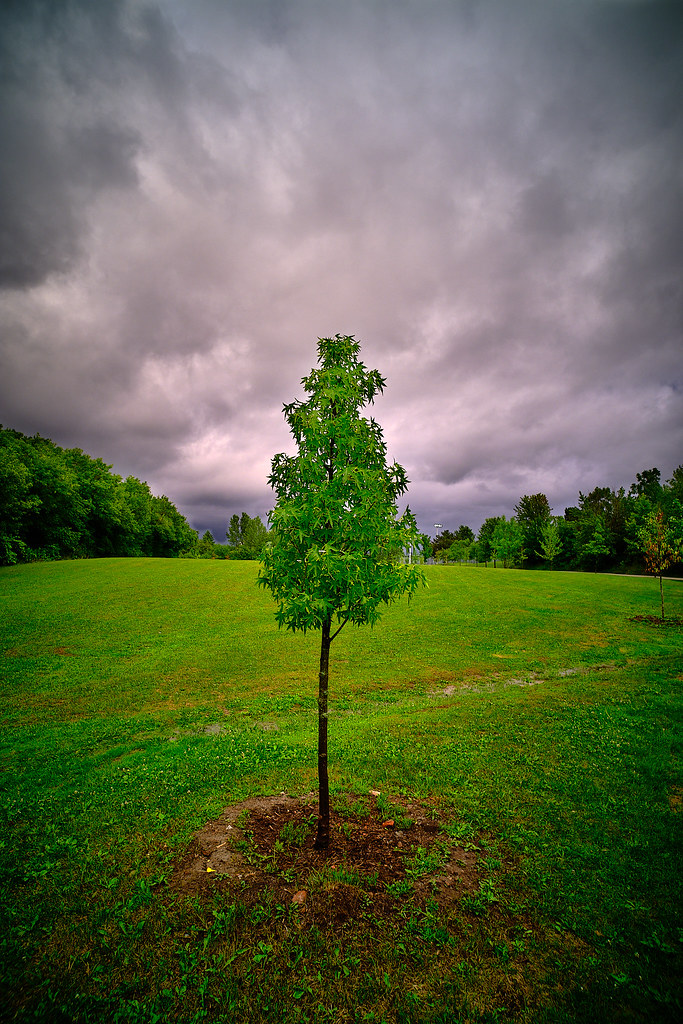
Tree in the Storm 

Fujifilm X-T2, 7Artisans 12mm f2.8


Yesterday's post on my experiences with adapting lenses, and especially the frustrations of adapting older wides on APS-C inspired me to take the recently-neglected X-T1 out, along with my Nikkor 24/2.8 K and Super-Takumar 35/3.5 and do some shooting.

This reminded me just how good these lenses actually are, even if the maximum aperture is pedestrian. The handling is also pretty good. While these lenses are a fair bit larger than the native Fuji X options I have, they're still not so large or heavy that they handle poorly on the X-T1.

I didn't come back with too much, the light was honestly lousy even by noonday standards and while I took around 50 shots, only a couple were really usable.

I do have to shoot some more with these lenses. The 24 is frankly better in all regards except speed, size and MFD than the Neewer 25mm f1.8, and it's pretty close on MFD, with its 0.3m MFD. Hmm, maybe I need to find a 28/2.8 AI-S, which focuses to 0.2m and is legendary in its close focus performance...

Sunday, 9 August 2020

Some Thoughts on Adapting Vintage Lenses

Sun over Seaton 

Fujifilm X-T2, 7Artisans 12mm f2.8


I've been adapting vintage lenses to digital cameras since the day I got my first DSLR back in 2005. I love manual focus and manual lenses and I've learned a few lessons the hard way.

Here's a few thoughts.

For APS-C shooters, don't bother adapting anything vintage wider than 35mm, and frankly most vintage 35's aren't worth your time. At 40mm or longer, adapting comes into its own. This goes doubly for Mirrorless, where you pay a significant size penalty for adapting lenses wider than 35mm as compared to simply buying a cheap and native manual focus lens. The issue is that you're already somewhat more dependent on lens speed than a FF shooter and vintage glass wider than 35mm is very rarely faster than f2.8, and when it is it's usually very low contrast wide open. That makes focus all but impossible on DSLR's and merely a pain on Mirrorless. Also most folks just find largish f3.5 normals kinda useless. 50mm and longer? Have fun, 50-200mm in particular is a sweet spot (longer and I find AF just becomes more and more useful for the sort of shooting you'll want 300mm+ lenses for)

For m43 shooters (or the few remaining Nikon 1 shooters). Don't waste your time. The crop factor hits you far worse and frankly anything on either side of the 50-100mm range is just going to suck as a shooting experience. I'd only bother really with macro's, and especially ~100mm ones. The more I shot m43, the more I just left everything vintage except macros at home.

For FF shooters, go nuts. You're not paying any penalty for adapting, especially on mirrorless, that you wouldn't have on the original camera, with one glaring exception. The exception is the use of classic RF wides (or the handful of SLR wides that require MLU to mount) on non-Leica cameras. These lenses have some interesting colour shift issues and require care to use with success.

As somebody who doesn't own much in the way of AF lenses, with one single one for my Fuji's (the XC35mm f2) and only a handful for my D750 (4 in my shooting kit and a spare 50mm) as compared to the 15 or so vintage lenses I own

Wednesday, 5 August 2020

7Artisans 12mm f2.8 FX - Initial Impressions


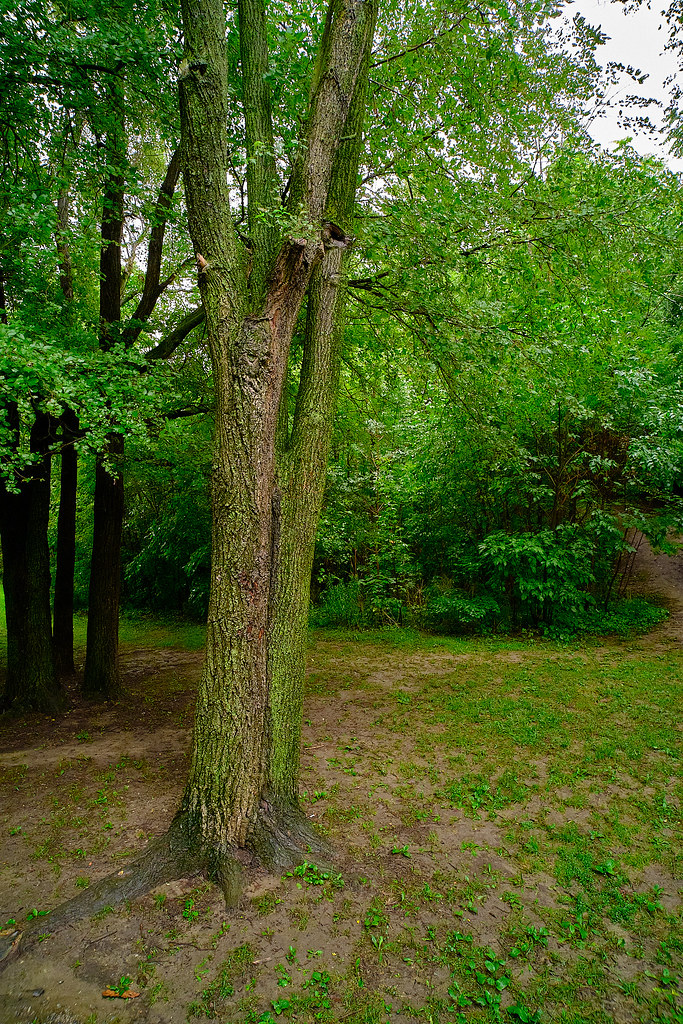
Two Trees
Fujifilm X-T2, 7Artisans 12mm f2.8

My 7Artisans 12mm f2.8 arrived yesterday, after a surprisingly long wait for an Amazon Prime order (ordered last Friday, man I've become spoiled by next day shipping). This will be my go-to UWA on my Fuji bodies for the foreseeable future.

Initial impressions are very good. My expectations in terms of presentation were for something akin to my Neewer 25mm f1.8, ie a lens in a decent little leather pouch, in a simple cardboard box. The Neewer is a re-branded 7Artisans lens and led me to that conclusion.

What I got was much different. A slick black box with 7Artisans LENS filigreed on it, opened it up to find a lens cloth (nice, but in the listing so no extra points), a slick microfibre lens pouch and a little plastic pouch containing a stick-on focusing tab, plus the lens paperwork (Warranty card and a little manual with some useful bits and some Warm Ticks). Lifting those out finds a removable closed-cell foam insert, which can be removed to find the lens securely cradled in a second closed-cell foam insert, contained in a small plastic bag. Really impressive packaging, better than my Laowa 15mm for sure, and for a lens which sells for 1/3 the price. Frankly, most camera makers do not package their lenses this well, even at far higher costs (my Zeiss 85mm f1.4 came in good old styrofoam)

Taking the lens out of the package, I continued to be impressed. Again, I was basing my expectations on the Neewer/7Artisans 25mm f1.8, which has an OK build, completely uncalibrated focusing and a very grindy focus feel when new (the helical needed to be broken in, it's quite nice now). The 12mm on the other hand has excellent build, just about on par with the Laowa 15mm. Infinity focus appears to be dead-on (and I mean exactly on) and the focusing is buttery smooth, with just the right amount of damping to make the focusing tab a useful add-on. The lens cap is a metal push-on cap that fits over the integrated hood. It's not that wide to not include a filter ring, but 7Artisans sells a 77mm filter adapter as a $25CDN addition, I'll be ordering that eventually and I like that it's optional as this is a surprisingly compact lens without it, barely larger than the XC35/2. The aperture ring is clickless and ranges from f2.8-f16, a little surprising that it doesn't make it to f22 or smaller for those deep-DoF shots. Not an issue for me, I'll pretty much leave it at f5.6 or f8 for the most part.

A couple quick test shots showed that the sharpness is good in the centre at least. Close focus is 20cm, more than adequate for a lens like this, even if I'm spoiled by the Laowa 15mm and its 1:1 close focus. No flare/coating tests yet, and I expect that to be the biggest weak point of this lens, I have lenses from 4 different Chinese brands and 3 different factories (Laowa, 7Artisans/Neewer, Yongnuo) and all of them have lousy coatings, even the $500USD Laowa 15mm f4 Macro.

Overall the presentation and quality are far better than I'd expected for a $240CDN Ultra-wide angle lens. Well done 7Artisans.


Monday, 22 June 2020

Micro-Nikkor 55mm f3.5 AI - Shooting Fuji on the Cheap Lens #3 Option 1


Bee and Thistle
X-T1, Micro-Nikkor 55mm f3.5 AI

The third lens on the list is the mild telephoto. This is your everyday portrait, macro/flower and general use telephoto. I'll cover a few options here as this is one place where there are both many options and those options are somewhat specific to the sort of work you do.

This is a real classic of a lens and well known in the Nikon community for its excellent optical performance at all focus distances and low, low cost. It does 1:2 macro natively and 1:1 when paired with one of the various 27.5mm extension tubes like the PK-13.

They can be had on the used market for as little as $30USD, depending on version. Skip the non-AI preset version, it's collectible and thus wildly more expensive. The other versions are all pretty much the same in performance aside from the coating getting better with each variant.

Combined with a cheap eBay or Amazon sourced Nikon adapter the 55mm Micro-Nikkor makes an excellent do almost everything mild telephoto on APS-C. I've used this lens on Nikon bodies as an APS-C mild tele and a Full Frame normal with excellent results. The only real weakness is the f3.5 maximum aperture. If you want shallow depth of field or a lot of low light work, this isn't the lens for you.

The 55 has had a spot in my bag for the better part of 2 decades on APS-C and Full Frame and if you don't need the speed, it's hard to beat it as a macro & general purpose mild telephoto for the Fuji shooter.

Sunday, 21 June 2020

Neewer/7Artisans 25mm f1.8 MC - Shooting Fuji on the Cheap Lens #2


Chive Angel
X-T1, Neewer (7artisans) 25mm f1.8

The second lens I'd recommend buying is your mild wide, in the 17mm to 25mm range for APS-C (28-38mm equivalents). Like the fast(ish) normal this is generally a lens you can leave on the camera and shoot all day long, in fact the image above was taken on a photowalk where I only shot with this lens. 

The mild wide is also the alternate option for your first lens. If you prefer a wider angle, or are a street shooter, you may want to get a lens in this range even before a normal. Others may prefer to only have a lens in this range and not buy the normal (or vice versa). 

The 7Artisans 25mm f1.8 was my choice here. It's equivalent to a 38mm lens on Full Frame, which sounds like an odd focal length but was actually a very common one for fixed-lens film P&S's back in their day. It's just a touch longer than the classic 35mm focal length. 

I picked this lens semi-arbitrarily. I liked the cosmetic design better than the other common 25mm (from Meike and various rebrands) as I like SLR-style lenses more than RF style lenses in terms of looks. I bought the Neewer-branded version for price reasons, but they are just rebranding the 7Artisans lens. There's also an available 22mm f1.8 from Zonlai for those looking for something just a touch wider. Sadly I've yet to see a 17-18mm (28mm equivalent) yet from the various chinese makers. 

Out of the box my copy had a rough focus ring, which broke in fairly quickly and focuses well past infinity (infinity is at the 15' mark). These do not come with the focus calibrated. Thus I recommend buying from Amazon, and sending it back if it doesn't reach infinity focus (past infinity is fine for most uses, although it does limit close focus). As this lens is made in 4-5 different mounts, be sure to get the Fuji X mount version. 

I've found the optical performance to be surprisingly good for the very low cost. At well under $100USD, this may end up being the cheapest lens in the series, depending on which path I go down for a mild telephoto. Is it world class? Not at all. But it can get very sharp in the centre, acceptable at the edges and actually outperforms Fuji's other-wise excellent 23mmf 2 at minimum focus distance. 

Compared to adapting a rangefinder lens in this focal length, the 25/1.8 is cheaper and faster than anything even vaguely affordable (like the Cosina Voigtlander 25/4 Snapshot-Skopar)

Next up will be the mild telephoto options in the 55-60mm range. That will cover a few posts as there are a number of viable options there as that's where adapting really comes into its own. 

Sunday, 14 June 2020

Buying Cheap Lenses


Barn at Laughlin Falls
D750, Nikkor 20mm f2.8 AF

Here's a little guide to buying lenses on the cheap.

First off, quit caring about cosmetic condition. Pretty lenses cost more. They don't work better (with 1-2 specific exceptions). Beat up lenses work as well and might even look cooler (brassing looks cool, worn plastic or paint on a non-brass lens not so much)

Second, don't buy zooms. If you want cheap and not junk, you want to be shooting primes. Cheap zooms are usually a bad deal, although there are a few exceptions. If you want to find those exceptions, be prepared to spend a lot of time researching them, and don't be surprised when the 'cheap but awesome' lenses turn out to be anything but. I've owned a good copy of the legendary Minolta 70-210mm f4 'Beercan'. It was a nice lens on film and 12MP APS-C. Stuck it on 24MP APS-C and it was a dog, just didn't have enough resolution. I've been bit a few other times by this. If you want cheap zooms, buy new designs, there's some surprisingly good lenses out there as current kit lenses, especially for f8 performance.

The flip side is sometimes you get lucky, I've gotten some great shots with my $50 Nikkor 70-300 f4-5.6 AF-D, which hasn't been considered a good lens since the transition to digital. My 24-85mm f3.5-4.5G AF-S non-VR was good enough that 10 years later I still regret selling it.

What do you want to care about?

The first thing is to pick a system if you are a mirrorless shooter (or looking to use manual focus lenses on Canon EF). If you shoot Nikon or Pentax, congratulations, aside from mount conversions you are stuck with native or semi-native (M42 on K) lenses. Buying 1-2 adapters is cheap, more adapters add up.

The next rule is simple. Everybody makes pretty good 50mm and 135mm lenses. While 28mm's are everywhere, that rule doesn't cross over to them. Most manual focus 28mm lenses are trash. You need to be using a popular system for something other than those 3 lenses to be findable for non-silly money. That means, Nikon F, Pentax K, Canon FD, Minolta MD, Olympus OM and M42 mounts. Beware Contax/Yashica mount. It sucks you in because ML lenses are cheap & decent. Then you find out that all the really good stuff is Carl Zeiss and expensive. Great...but expensive and that is not the name of this game.

Suggestions: For mirrorless shooters Canon FD and Minolta MD are the way to go, these are the least adaptable lens lines to DSLR mounts and both have a selection of excellent glass available. For Canon EF shooters it's Olympus OM because they share adapters the easiest, but they can be pricier than FD or MD due to the wider adaptability. Nikon and Pentax should stick to their native mounts (and m42 for Pentax).

In general, skip 3rd party lenses if you're looking for good but cheap older lenses. With a few exceptions old 3rd party glass isn't all that good, and the exceptions are largely well known and not cheap. Sigma and Tamron's 24 & 28mm primes are the main exceptions here, they're actually pretty decent and not very popular so they can be had cheap. I like Tamron's 28mm f2.5 better than the Sigma 28mm f2.8 Super Mini Wide, but I like the Sigma 24mm f2.8 better than the Tamron 24mm f2.5 (and yes, at some point I've owned all 4 of these lenses)

When picking a lens, check for 5 things.

1. Focus ring works well. Don't get it if it's grinding or sticky as the lens needs disassembly
2. Filter ring is in good condition. Don't buy a lens with a bad filter ring (dinged, chewed up), you will regret it.
3. No rear element damage. Mild front element damage usually just adds a touch of flare, rear element damage directly affects IQ. Note minor scratches and coating discoloration on the front element can lead to superb deals.
4. Functional aperture. if you shoot Mirrorless (or adapted to EF), then a slow aperture isn't an issue, but a sticky one always is because it will fail inevitably in the field at the worst aperture it could (usually stopped all the way down).
5. Fungus. Never buy a lens with fungus, don't take one even if offered for free. Fungus can infect the other lenses in your bag.


Wednesday, 6 November 2019

A Pleasant Discovery

Hidden Spider
Panasonic G3, Nikon Series E 100mm f2.8

Not the spider in the picture above, but finding out that manual focus lens prices have come back down to reality after a long bubble driven by the video crowd.

I was very happy to find out that I can again get 100/2.8 Series E's for $100, and 24/2.8 AI-S's for under $200. There's a number of F mount and M42 mount lenses that I regret selling and now I can slowly re-buy them for more than reasonable amounts.