Showing posts with label Philosophy. Show all posts

Saturday, 11 July 2026

Why Buy a DSLR in 2026?


D7500, AF-S Nikkor 85mm f1.8

Why would somebody buy a DSLR in 2026? Especially a new or nearly new one. My D7500 was technically used, but as recent production and less than 1000 shots on it, it was functionally new. 

There's pretty much 3 reasons why you'd do so.

1. The Optical Viewfinder. Some people simply prefer this experience to an EVF, and there are advantages in some conditions, especially very bright conditions. 

2. The 'DSLR Experience'. Mirror slap, OVF blackout, nice chonky grips and amazing battery life even with tiny batteries. Shooting a DSLR is not quite the same as mirrorless and some folks just like the DSLR experience better.

3. Value. Simply put there are very few cases today where you get more value for the dollars spent from mirrorless than from DSLR's, especially if you want more than 5-6fps or a high performance APS-C body from somebody other than Fuji. The real exception here is high-MP but low speed landscape cameras, there are some real steals on 40+MP low-speed bodies in the A7RII and OG Z7, which cost similar to a used D800 or D810, but deliver Z8/A1 level resolution and even more DR, at the cost of mediocre AF and low practical FPS (neither of which is really a landscape camera need). 

For me it was really #3 driving things, and mostly because I wanted a faster body (7-8fps minimum without compromises) with APS-C level pixel density and at a cost similar to or lower than my Z5ii's sale value. 

Note this brings up that SLR mount lenses are even more of a value than the bodies these days, since many of them are fully functional on mirrorless via adapter (and arguably more functional given you can get IBIS with lenses whose SLR mounts did not offer that feature). I'm still primarily using and buying SLR mount lenses (mostly F mount) because of this. Great glass, now cheap. Yeah, often the native mirrorless lens is better technically than the older SLR mount lens, but the price difference and performance are also often at odds with each other. 

For the value driven photographer, there's often real benefits to staying in the DSLR ecosystems rather than moving to the latest and greatest mirrorless system. 


Wednesday, 22 January 2025

Some Thoughts on 'Soul' in Cameras and Lenses


Nikon Z7, Z 40mm f2.0

One thing I dislike about a lot of modern gear is that it lacks Soul. But that's not always a bad thing as well.

In order to understand this, you really have to figure out first what 'Soul' is to you in regards to camera gear. Then you have to decide when you want 'Soul' and when you just want a tool that simply delivers the goods. 


For me, it's a fairly simple definition. It's the existence of flaws in an interesting but non-aggravating manner. Some of these flaws can even actually be pleasing.

The Sony A7RIV and A7II both have flaws and lack soul, because the flaws in question were either invisible to me for the way I work, or aggravating. A lot of the frustration here is just Sony's predilection for 'invalid operation' buttons (ie UI aspects that unexpectedly just don't. Some call this the S*ny effect for all the asterixes in their manuals calling out where settings conflict or disable items unexpectedly). Conversely the R6 didn't really have any flaws that aggravated me, it also didn't really have any that interested me. Same for the lenses, they were tools, nothing more. Good tools, but that's it (the R7 had both one interesting flaw, that weird rear control dial, and one aggravating one, the AF losing its shit when there's a busy background)

Conversely most Zeiss lenses have a specific rendering flaw that is exceptionally pleasing. This is a loss of contrast in out of focus areas as compared to the in focus areas. That creates the classic Zeiss '3D Pop' look, as opposed to the flat 'greenscreen' pop you get from a more perfect lens (such as the Nikon 135 Plena or many of the most modern Leica lenses). I prefer the rendering from the less 'perfect' lens, although I also see value in the more 'perfect' lens as it will never surprise you. The 'perfect' lens is a perfect tool, predictable and always delivering as expected. The less perfect lens gives some happy little accidents that result in more interesting images. 

I'm in particular fond of lenses with some spherical aberration wide open, that gives that 'classic' fast lens rendering and few flaws. I also like lenses with good center performance and somewhat unique rendering elsewhere in the frame. 

I don't like lenses that are just unsharp overall, or are both expensive and not generally flaw-free at f8. The flaws have to be interesting, not aggravating. Handling flaws are the same for me. Weird handling? Sure. Sloppy zoom or uncomfortable focus rings? No thanks. 

I've long been fighting the draw of having a simple, effective kit and an 'interesting' kit. One part of this is I didn't until recently really understand when and where I preferred each half of that equation, or why that was the case. I think I understand it better and that means I know better how to build a kit that fits both needs I have.

In short, when I'm out shooting landscape/nature, I really want a kit that doesn't get in my way and lets me get the shot I need. That's generally a UWA that give 18-20mm or equivalent view, a normal-ish zoom and a close focusing telezoom capable of 300-400mm. The most wiggle room is in the first two, a UWA zoom and normal prime can work here, or a UWA prime and normal zoom. I think I prefer the latter these days. 

However in and around the city, I want a small kit of primes that have some interesting or unique aspect to them. 

The answer really is just two have 2 bags. One for Landscape/hiking, one for city work. The latter is the weird glass and the shelf cycles through it, the other one is the 'boring' lenses, or at least 1-2 'boring' zooms and 1 or 2 'interesting' lenses (UWA and macro or tele prime). Body-wise that could be either 1 or 2 bodies, but they have to be reasonably cross-compatible (mount yes, battery preferred, cards not so much a requirement so long as I'm not stuck buying weird or expensive cards)

Note I also do need a 'video' body for the Youtube tutorial videos I do, but that just needs a flippy screen or external display option, a reasonably close focusing normal zoom and a mic input, I don't need AF or anything else, so all sorts of oddball options can work there, even an old DSLR if it can take my Nikon lenses (so a Nikon or Canon)


Tuesday, 14 January 2025

Looking Back at Canon After 18 Months


Canon R7, EF-S 10-18 IS STM


After 18 months with Canon RF, what's my take on the system.


First off, if you are looking to get into FF mirrorless and cannot afford high-end glass or bodies, a used R6 or new R8 and Canon's consumer lens lineup is hands down the most complete offering available under $2K USD. Both Nikon and Sony offer mixed bags of body/lens selection while Canon not only has reasonably-priced zooms from 15 through 400mm including both super-zoom offerings, a super-compact kit zoom (24-50) and a normal kit zoom that's actually pretty good (24-105), and well-featured bodies. Only Canon offers a fully rounded consumer lens lineup for FF mirrorless, which is ironic since they also need it the least as they had that in EF mount and EF adapts very well to RF. 

Nikon simply doesn't have anything zoom-wise except 1 super-compact offering (also a 24-50) and several super-zooms (notably a 24-200 and a 28-400), but no inexpensive UWA zoom, no inexpensive mid-range zoom and the only inexpensive telezoom option is a Tamron (70-300). 

Sony has the better filled lens lineup, but their general mid-range zoom (28-70 OSS) is not nearly as good as the Canon 24-105 STM (shorter range, optically inferior), still relies on a Tamron option for that inexpensive telezoom and the UWA option really relies on finding an old ZA 16-35/4 cheap (which is VERY doable so I don't consider that a real limiter)

In terms of primes, all 3 systems do pretty well, except Nikon lacks an inexpensive UWA AF lens to compete with the Canon 16/2.8 or the Samyang 18/2.8 FE, and Nikon also lacks an inexpensive short tele like the Sony 85/1.8 or the Canon 85/2 Macro, but there the S 85/1.8 is not that much more money (used cost is about the new cost of the competition) and it's simply a better lens. Nikon also has some good 3rd party lenses here, so it's only really inexpensive & decent AF UW primes where there's a real gap. Sony's biggest issue is that their 28/2 and 50/1.8 are pretty lousy, but there's a wealth of better 3rd party options in the same price range (some of which are also in Z mount, none are in RF except a long out of production Samyang 85/1.4)

Nikon's got good body offerings though. Sony's body offerings are pretty much terrible in this price range (the A7C line is a disaster ergonomically despite goo dinternals) unless you track down an used A7III which is already inferior to the R6 or R8 in most regards. The Z5 is also better than the A7III as an all-purpose camera (better handling, better IBIS), but slower in AF and frame rate (I'd rather use a Z5 than an A7III, but the A7III is a better action camera, but the R6 is far better as an action camera than either Nikon or Sony offering). You can also readily get used Z6's and even Z6II's in the price range I'm talking about (essentially sub-$2K CAD, or $1599 USD or so, the cost of a new R8) and Z7's are also available here used, as are A7RIII's now. So for used, you have good enough options from all 3 makers, but new the best options are Canon followed by Nikon (given I cannot recommend the A7C series to anyone due to handling issues)

So in short, I think Canon does offer a lot at the range I was playing in. I tend to do mid-range gear for the most part, augmented by higher-end MF glass. Canon does really well at the first, but lousy at the second half. 

I think that if the camera is a tool for you to get great photographs, and/or you want a solid selection of 1st party lenses that covers your needs at a diverse set of price points, Canon is hard to beat. The RF system from the R5/R6 onwards is just quietly competent and Canon offers the best all-round performance options at the lower end of the price range for FF bodies. 

If you want some quirks or 'soul' in your setup, and/or want access to oddball & interesting lenses that are fun to shoot as much for what they do badly as what they do well, a better manual lens experience, inexpensive higher-MP bodies or the camera itself is part of your hobby, there's other, better options. Unsurprisingly, the Z7 hits on multiple aspects of that second list compared to the R6, and I'm definitely more of a category 2 shooter. 


Wednesday, 19 May 2021

Motivation


Panasonic G1, Super-Takumar 35mm f3.5

The last couple weeks I've been struggling with motivation again. Not to get out and shoot, but to get out and shoot with my film cameras. After a very active March & April where I shot 20-ish rolls of film, I'm just reaching for the digital bodies every time I leave the house.

Some of this is just my usual addiction to shooting flowers in the spring. I don't like doing that on film, but love it on digital, especially with the E-M5II/12-40PRO combo which is a nearly perfect setup for flower photography. Some is that I've pretty much shot everything there is close to home at least 5 times and I only really enjoy constant revisiting when shooting flowers/insects.

The challenge here is that my Film Instagram gets a lot more interest than my digital one does. I generally see 25-30 likes on the first 24 hours of posting to the film IG, and 6-7 likes on the regular IG. This is despite having 50% more followers on the regular one.

So I sort of want to chase Likes, but on the other hand forcing myself to make photographs is a prescription for even more motivation loss. If I push myself too much to make film work, I'll just end up sticking everything in the bag and leaving it alone for a while, and that while might end up being years.

That said, I think I'll just grab the F2a and 35/2 AI today, along with a spare roll of HP5+. I need to run out and get some milk at lunch and that's always a good walk for film (east on Eglinton Ave West between Allen Rd and Bathurst St)

Monday, 10 May 2021

Random Musings


Pentax 6x7, SMC Takumar 105/2.4, Agfa Scala 100

Been involved in an interesting discussion on FredMiranda based off a Professional Photographer's social media posting about why they continue to stick with DSLR's.

One of the commenters was going on about how Mirrorless isn't ready for prime time. A few of us started quizzing them about what they meant. Turned out it was a combination of buying Sony offerings obviously unsuited to their uses (A6x00's don't handle well with long lenses) and more importantly, refusing to read the manual. They had a number of issues with performance on the Olympus E-M1.2 that come down to they left the default settings then complained that the default settings didn't do what they wanted and rather than read the manual (the E-M1 series are insanely configurable and almost everything can be setup 5 different ways) they just used non-optimal workarounds and complained about it.

Rule #1. Learn your camera. Especially if switching systems (the guy in question was a long-time Nikon guy and seemed to expect identical behaviour from another brand's camera). If you don't learn your camera, don't expect to enjoy the experience. 

When I get a new camera I usually buy a guide (Thom Hogan's guides for Nikon, other writers handle other systems. There's excellent guides out there for Olympus and Fuji that I'm aware of, and I'm sure Canon, Sony, Panasonic and Leica all have 3rd party guides as well). I always spend a bunch of time figuring out what the bits I expect to use will do. I also have a pretty standard set of features I use (A & M modes, Auto ISO, FL settings for IBIS/Non-CPU lenses, bracketing and if the camera is capable of doing it in RAW mode, HDR/stacking) so going through and figuring out how the features I use regularly work is part of the new camera experience.

Rule #2. If you are doing something that challenges the camera, like Bird in Flight photography, go read some on doing that sort of work on that camera before complaining about the camera. There's plenty of guides online. Olympus for example has a great starter guide for BiF on their website which will give you good settings to start from. The defaults are almost never right for anything past general walkabout shooting.

 Moving on to other randomness, I'm a little frustrated with shooting the Z5 these days, and frankly am kind of regretting getting rid of the E-M1.2 to get it.

I still think the Z5 is a great camera, the body itself is not the source of my frustrations. It's the lens situation. 

There's three aspects to this.

1. I'm very hesitant about the Z 24-50. It screwed me in the cold. It handles poorly. The close focus isn't as good as I'd like. On the plus side it's excellent optically, the AF is speedy and the 52mm filter size is great when pairing with AI lenses, as it's the standard filter size for older Nikon glass.

2. The FTZ handling is meh at best. The chonky tripod mount blocks the body mount in many setups, so I need to have an L-bracket mounted to use a capture clip with the body + FTZ. The tripod mount also doesn't fit the hand well, and it's simply kinda porky and adds a lot of weight to the Z5+manual lens combos. I think I'm just going to have to accept at some point that adapting SLR lenses is just not working for me as a regular use setup. I love the idea, but I didn't like the reality on the A7II, I didn't like the reality on m43, I didn't like the reality on the Fuji's and I don't like the reality on the Z5 either, at least with the FTZ. I might try a 3rd party F mount adapter, but that will cost me EXIF.

3. Native Nikkor lenses. They're big, they're expensive and I just don't see myself buying into a system that pricey to deliver IQ that I just don't need. 

The challenge is that I REALLY like the body itself. My challenges are all around what to put in front of it. I'll admit I've been spoiled by the m.Zuiko PRO 12-40/2.8 for its small size, ridiculously good close focus performance (0.2m and SHARP) and optical quality. 

I see three options.

1. The simplification option. Trade Z5 kit in on an E-M1.2 as soon as Henry's gets one in used (or special order a new one at the current pricing, which gets me a new one for $200). I get hosed on my investment, but get a working kit relatively quickly.

2. The glass option. Trade Z5 in and use the credit for glass for m43 and/or film kit. That could get me a really awesome couple lenses for film (ZF.2 25/2.8 and 50/1.4) which pair well with my 105/2.5, or some nice options for m43. I'd re-buy the E-M1.2 at a later date. Still get hosed on my Z5 investment here but it could round out one of the kits very quickly.

3. Keep the Z5, move to using it with native 3rd party lenses/adapted M/LTM/FE lenses. I like the Z5 better than any Sony bodies, so I'd effectively remove my reliance on adapting SLR lenses for more compact adaptation options like M and FE mounts, and/or buying some of the 3rd party manual lenses from TTArtisan, 7Artisans and Laowa. I end up with a bunch of capital tied up in a body that's basically a side project, but on the flip side I keep a body I really do enjoy while investing in glass that better suits how I work with it and removes some of the handling warts. And I still have the FTZ to use with F mount lenses if and when it's needed. I'd put more into the m43 side as that would become my primary hiking kit. 

Frankly, what will likely happen is either #1 or #3. #1 if I continue to get more frustrated with the Z5 lens situation, #3 otherwise. #2 option 1 puts the investment in an area I'm unwilling to bet on, I'm still not sure if film is going to remain a major part of my work, it's really enjoying a boost right now because of the level of instagram engagement I'm getting and generally liking film for around town/found item work. I'm not sure I've any interest in expanding it beyond that though, and I kind of expect the rate of shooting to taper off some as things open up and I can get out in the woods again. 

Friday, 2 April 2021

A New Instagram and More


Nikon FE, Ilford HP5+, lens unrecorded but probably the Nikkor-H 28mm f3.5

I've started a second Instagram account, Filmic_Mawz, for my film work. This will be focused on Cityscape, Found Item and a little Street Photography, much as my main Instagram and Flickr are focusing on Landscape and Nature Photography. 

The reason for this is simple, the more I think about what I shoot, the more I realize that I have two very different approaches to how I work and what I shoot, and likewise very different preferences.

For landscape I prefer colour and the look I get from digital and/or medium and large format film photography. I have relatively little interest in 35mm or B&W landscapes, although I may dabble at times. When hiking I generally prefer to carry a minimal amount of kit, which means a couple zooms and maybe one prime. The minimalist hiking kit here and knowing what I have before I leave the location is the benefit of digital here, although I could totally see myself one day shooting nothing but 4x5 E-6 on a field camera with a couple lenses and a bag full of ND grads. 

For cityscape and found item work, I prefer B&W and also smaller format film. Part of this is purely the gritty look of small format B&W film, especially fast films like HP5+ and TriX, but some of it is just enjoying the workflow of shooting 35mm manual mechanical cameras when walking around the city. 

None of this is of course exclusive, I actually quite enjoy shooting cityscape & found item work in B&W with my two Fuji's and my collection of inexpensive Chinese manual lenses for them, a lot of that is purely in how similar the experience of shooting an X-T series body is to shooting an FE or other aperture priority manual focus body. In particular I'm not going to stop using the X-T1/18UFO combo anytime soon, its just too fun. 

Because there's such a huge thematic and process shift between the two sorts of subjects I tend to shoot, I'm trying to split them logically where I can. I'm trying to avoid the case where colour digital landscapes disrupt a stream of B&W city work or vice versa, so each account presents a consistent look and subject matter. 

I'm still debating how I want to use my second Flickr account, Filmic, as Flickr makes flipping between accounts somewhat aggravating while Instagram has made it increasingly easy to do so. 


Monday, 8 February 2021

The Last Frame, Revisited


Fujifilm X-T2, Micro-Nikkor 55mm f3.5 AI

About 18 months ago I posted The Last Frame, my goodbye to my first X-T1 and a short summary of what I thought Fuji needed to do.

I noted 3 issues in their lens line.

1. The XC 50-230 is too expensive - Still true today, and more so now with the space getting more aggressive. Fuji needs to drop the price, the XF70-300 will result in a flood of used XF55-200's which will make the XC50-230's pricing even more difficult to sell at.

2. Consumer UWA. I said the 10-24 needed a WR update, which arrived last fall, and they needed a cheap UWA option. With used original 10-24's coming down and a plethora of cheap 3rd party options around 12-14mm, I think this is much less critical although I still want an XC10-xx zoom for ~400USD

3. No consumer Fast prime. The XC35/2 solve that a year ago. Fuji too the other option from what I suggested, cloning the XF35/2 into a cheap barrel rather than doing a slower 35/1.4

In addition I noted they needed a 80-300, a 135 and 300/4 prime and a 200-600. We got the XF70-300 and a 150-600 is now a strong rumour, which will cover the zoom side of things. I still think they need the telephoto primes as well. 

In addition we got 2 lenses that I happen to think were a complete waste of time and effort.

The XF50/1.0, which has not been well received. It's clearly a good lens, but it's not exceptional and the price is, and Fuji dropped the ball badly when they decided to change track from a needed XF33/1.0 to an unneeded XF50/1.0. They'd have been much better off doing a WR/AF update of the well loved XF56. 

The XF27 updates a lens which is beloved and ignored. The original lens was optically excellent and quite liked by a small but vocal group of users. The rest thought it too expensive for a lens without an aperture ring (it is the only XF lens like that), too large for a f2.8 APS-C pancake and/or too slow for a large APS-C pancake. Fuji's updated added WR and an aperture ring, but didn't solve the fundamental issue with the lens for many, it's too big for its speed, or too slow for its size. I'd rather have seen it either become a 27/2 on the same size budget or be tiny and an XC27/2.8.

The 10-24 and 27 updates now set the expectation that Fuji will be updating or replacing their older XF lenses. And I agree they should. But not all of them.

1. The primes - all should get WR and AF drive updates. The 23/1.4 probably should get a full redesign. I'd like to see the 35/1.4 keep its optical design and Fuji should launch a XF 35/1.2 WR to deliver that fast modern lens. Note we already know that a XF18/1.4 is coming that will replace the XF18/2

As noted above, I want to see a 135 and 300, I think Fuji needs a 70/1.8 or 70/2.8 and a 180-200/2.8 as well on the long end (a 500/5.6 PF would be amazing). They also need some work on the wide end, a 8-10mm prime would bring some real love in an area Fuji has mostly ignored for years.

2. The zooms need some work too. As I noted above, I think Fuji needs to get a consumer UWA out. The 150-600 is even more important as telephotos remain Fuji's weakest area system-wise.

What else I'd like to see:

XF18-55 and XF55-200 need either an update or a price drop. The XF16-80 and XF70-300 functionally replace them for the higher-end user, but the older 2 lenses are still smaller, faster at the wide end and cheaper, but they aren't cheaper enough for non-WR lenses.

I'd like to see an XC100-400 as well, say f4.5-7.1 or 5.6-7.1 and compact. This is a 'nice to have' as for many the XF70-300+TC14 will cover this need. But if they can get this really small, it will sell.

I'd also like to see an XC18-135, essentially the same idea as the XC35, stick the current good optics into a cheaper barrel.

The idea here is largely building the right lens options for the X-S10 user. 

On the Body side, Fuji has 3 issues that I see.

1. No consistent UI. There are 5 current X bodies, the X-T4, X-T30, X-Pro3, X-E4 and X-S10. There are 5 current UI variants in that line. You cannot buy 2 different model bodies and have consistent UI unless you buy a body and its predecessor. Fuji only has bad choices here, but I can't help thinking that it's going to settle out with the X-Pro series + the X-S series. As much as I love the UI on the X-Tx series, when I look at how I use the cameras I'd get much more use of a camera laid out like the X-S10 or GFX100s and having real Custom Settings banks. And I'm probably about as close as you can get to someone for whom the X-Tx is perfect for in terms of UI. 

2. No WR bodies to match the lower-end WR XF lenses. It's interesting as Olympus has the exact opposite problem, no WR lenses to match their mid-level WR bodies. One of the X-S10, X-T30 and X-E4 replacements needs to be WR. The X-T40 is the obvious one, as the X-T30 has really lost its relevance in the current lineup, it's not small like the X-E4 but it's not got the ergonomics or IBIS of the X-S10. 

3. The $850-999 model jumble. This was bad enough when it was just the X-T30 and X-T200, now it's 3 bodies targeting the same pricepoint. That really should be one consumer body or two wider spaced models. Killing the X-T30 would largely solve this, as there's enough price and capability gap between the X-S10 and X-E4 to make them make more sense. The big issue is that the X-T30 competes against both the X-E4 and the X-S10, while those two bodies are so different that they only sort-of compete on price.

I can't help but think that Fuji needs to get back to the two line split. I'd like to see one of two model lines:

X-S1, X-S10, X-S100, X-Pro3

or X-S1, X-S10, X-Pro3, X-E4

I don't see Fuji going back into the low end of the market now that the X-T200 and X-A7 are done and Fuji has dropped their relationship with the 3rd party that was doing those bodies for them. So the second line makes more sense. 

I would be sad to see the X-T line die, but as much as I love those bodies, the X-S UI style would let Fuji grow their system. I think that Fuji would have introduced custom setting banks

I'd like to see it play out like this. X-T30 is quietly discontinued. X-S1 or X-H2 is released with an updated sensor, improved processing and GFX100s-derived ergonomics, but with a flip/twist screen for the hybrid shooters. X-T4 soldiers on until sales dry up or relative sales vs the X-S1/X-H2 show the market doesn't like the change.

Fuji could then either treat the X-Tx line like the X-Pro line and make it a specialty body (a X-T5 that's reverted back to a pure stills-oriented body at a premium cost and with the double-tilt screen returning could work alright, as  long as it is a niche body like the X-Pro3)


Thursday, 28 January 2021

2021 Goals

 
Fujifilm X-T1. 7Artisans 18mm f6.3 UFO

Well, with 2020 as a wrap, it's now time to set some goals for 2021.

I traditionally set 3 goals for myself. One for volume, one for getting out to shoot and one for engagement. I'm going to do the same this year, but I'm taking a different approach than I have in the past.

For my first goal, volume, last year I set it at 10,000 images. I beat that by over 20%. Volume is really not valuable in and of itself, it's merely a push to get out and shoot. But this year I'm going to do it differently. I want to break the 10,000 frame mark with a single camera. That's not 10,000 new frames in 2021, but rather just rolling over the all-time 10,000 frame mark with that specific body. That would be easiest with the X-T2 as it's already at 4300 frames, but the D300 and X-T1 are possibles also (both bodies have shot a couple thousand frames already). The reason for calling out specific bodies is that I've owned 2 other D300's (for somewhere north of 15,000 frames shot total) and another X-T1. The goal here is to try and reduce my tendency to chase the dragon with bodies. I'm not setting aside the possibility of adding or replacing bodies, just giving myself an incentive to get out and shoot steadily with bodies I already have, and hopefully get a few more bodies over that 1 year of ownership mark. The D300 has set an ownership record for digital bodies for me, I've owned it for 3-4 years now, long enough that I don't remember when I got it, just what I paid ($20 and an FM10).

The second goal is for getting out to shoot. I've done this as numbers of new locations and numbers of trips in the past, typically 6-12 outings. This year I'm simply going to say 'get out of the house and shoot something every week'. The COVID situation makes any other goal too hard to predict. So I'm going with volume of outings, but also with a very easy mark to meet, as a walk to the grocery with my camera will suffice.

The third one has traditionally been 'post to Flickr every day and try and build views'. This year I'm ignore Flickr in terms of goals, although I'm not planning on drawing down my activity there. For this year my goal is to post to Instagram every time I go out specifically to photograph. So not necessarily going to the grocery, but if I go out specifically with the camera, there will be a post. I'd like to build my IG presence and I need to be active to do that.


Saturday, 16 January 2021

2020 in Review

 
Fujifilm X-T2, Micro-Nikkor 55mm f3.5 AI

2020 was certainly an interesting year, shooting was largely concentrated in a 3 month period over the summer while the Pandemic restrictions were the lightest, plus a bunch of local shooting from my walks.

In terms of kit, I started the year shooting a Sony A7II, added a D800, swapped the D800 for a D750, added an X-T1 as a lightweight carry body, gave the A7II to my partner, added an X-E2 as an impulse buy/bag camera, shot a whole lot with the D750, added an X-T2 when I got offered a deal. I then sold the D750 and X-E2, got an A6300, returned the A6300 and got lenses, leaving me with the D300 that I've owned for a few years now, the X-T2 and the X-T1. Oh, and I bought a Nikon F2a for film use.

That's 3 systems and 7 bodies. Of which I kept 2 digital and the one film purchase. Lots of churn.

On the lens side, I bought more and sold less. 2020 saw me acquire several Nikon mount lenses, specifically the Nikkor 20/2.8 AF, Nikkor 24-50 AF, Nikkor 70-300 AF-D, Laowa 15mm f4, and Yongnuo 50mm f1.8N, plus a Super-Takumar 135/3.5 and a random cheap 135/2.8 in M42 mount, and finally in Fuji mount, the XC 16-50 OIS II, XC 35/2, XF 55-200, Neewer 25/1.8 and 7Artisans 12mm f2.8 and in Sony mount, the 16-50 PZ was acquired. Finally in Canon EF mount I got a 75-300 USM III and the 50/1.8 STM (plus a cheap EF->E adapter so those two lenses can be used on Sony).

I sold much less, selling off the 3 cheap Nikkor AF lenses (both zooms and the Yongnuo 50mm) when I dumped the D750 and returned the 16-50 PZ with the A6300.

That leaves me with a very functional kit for the Fuji's, plus a lot of fun in Nikon mount, with 15, 20, 24, 28, 35, 50, 55, 105, 200 and 300mm options (and only the 300 sucks, although the 200 needs a good CLA before it can be used on an SLR), plus a 50-135/3.5 AI-S zoom that I would dump if it was worth anything. And finally a few toys in other mounts, specifically 35/3.5 and 135/3.5 Super-Takumars, another random cheap 135/2.8 in M42 mount and my LTM Nikkor-SC 5cm f1.4. The two Canons went to my partner with the adapter, to be used with the A7II they were purchased for.

In terms of images shot, the X-T2 shot the most last year, with 4116 images. The X-T1 took 2286 images, the X-E2 took 647, 685 on the A6300, 895 on the A7II, 2797 on the D750 and finally 627 on the D800.

That's a total of 12053 images shot in 2020. I'd call that a healthy completion of my 2020 goal of 10,000 images.
I did not quite achieve my goal of 12 photography-specific daytrips, but I came close, with 8-10 depending on how I count. That's pretty good considering the lockdown. I did check a few spots off my to-do list, like Warsaw Caverns.
For posting, I didn't meet my Flickr goals, but beat my Instagram goals.

In terms of technique, I'd intended on expanding my use of long exposures, tripods & other supports and filters. I certainly was successful on the first two, the Platypod in particular has been key in my work there. Filters come over to 2021 as an area to focus on, as well as expanded long exposure work that a proper filter setup would allow for. In 2020 all my long-exposure work was low-light, I'd like to expand that to daylight work.

For my gear goals, I either failed miserably (filters, bodies) or succeeded fully (tripod/supports, lenses).

All in all, 2020 was a good year for me photographically. I grew a lot in my technique, got to go to interesting places and got some great images.


Sunday, 10 January 2021

Presets - The Bane and Saviour of Post-Processing


Fuji X-T2, XF 55-200mm f3.5-4.8 R LM OIS

Presets came up recently in a discussion I was having with a couple fellow photographers and I had a quite aggressive reaction to one of my friends comments on them.

I think that reaction bears some explanation.

Presets are the single biggest scam in the photography market today. There are thousands of presets for sale and they all have one thing in common, they suck and will make your post processing results worse. There's a very simple reason for this, those presets are tailored for somebody else's gear, workflow and preferences. They're a nice income stream for some photographers, but that's it.

The flip side is I'm also adamantly against the 'Do it all from scratch' mindset. That's a waste of time and effort. As you develop a style to your photography, you will find yourself making similar edits time after time. Do those edits. Save them as a preset. Apply and tweak to the image at hand. That's simply optimizing your workflow. Presets are a time-saving tool in your post, not a way to get instant awesome post. Use them wisely, but don't skip them, they will save you hours.

I maintain a fairly decent library of presets I've created that I use regularly. I also have a particular style I go for in my post, especially my landscape shots where I push deep blues, punchy greens and lightened shadows. Presets are simply a tool to get me 80% of the way to the final look by repeating the settings that I always start from. 

But my 'look' is something that's always evolving. I know I was overdoing the post somewhat last year, especially on some of the D750 shots. Just because you have ridiculous DR doesn't mean you need to abuse it, and I was for a while.

Sunday, 13 September 2020

A Return to Film


Voigtlander Bessa R, Nikkor-S.C 5cm f1.4 LTM, Kodak Tri-X

I’ve definitely been experiencing a resurgence in my interest in shooting film of late. I’m not going to abandon digital any time soon, but I’m pretty sure a large part of what’s driving the renewed interest is simple exhaustion in my interest in shooting digital in my local neighborhood. Flower & bee season is over and that’s all I really enjoyed shooting locally with the digital cameras.

I know I could just set the X-T2 to Classic Chrome or Acros, stick the 25/1.8 on it and wander about shooting film style, and I Actually have been doing that some, but there’s a shooting experience and process experience aspect to this and I just find myself unable to divorce the film process from this sort of shooting without losing some of the enjoyment. A couple rolls through the FE last week reminded me of the joys of shooting film for cityscape work.

I’ve also found my interest in larger formats returning. I shot 2 rolls of 120 yesterday, the first two I’d shot since 2012. One was finishing a roll in my Coronet Twelve-20 box camera, a roll that had been sitting in there for more than a decade as I honestly don’t much like shooting with a box camera. The second was a fresh roll of FP4 in my a Super Ricohflex TLR, which I quite enjoy using.

On the development side, I have a large backlog as I pretty much stopped cold with developing when I stopped actively shooting film in 2017. I even have a few rolls of 120 from 2012 that need development. I’m out of fixer and Rodinal, as well as 35mm neg sleeves, so a supply run will have to happen before anything else.

So expect some film work to start appearing here over the next little while.

Wednesday, 19 August 2020

2AM Wakeups

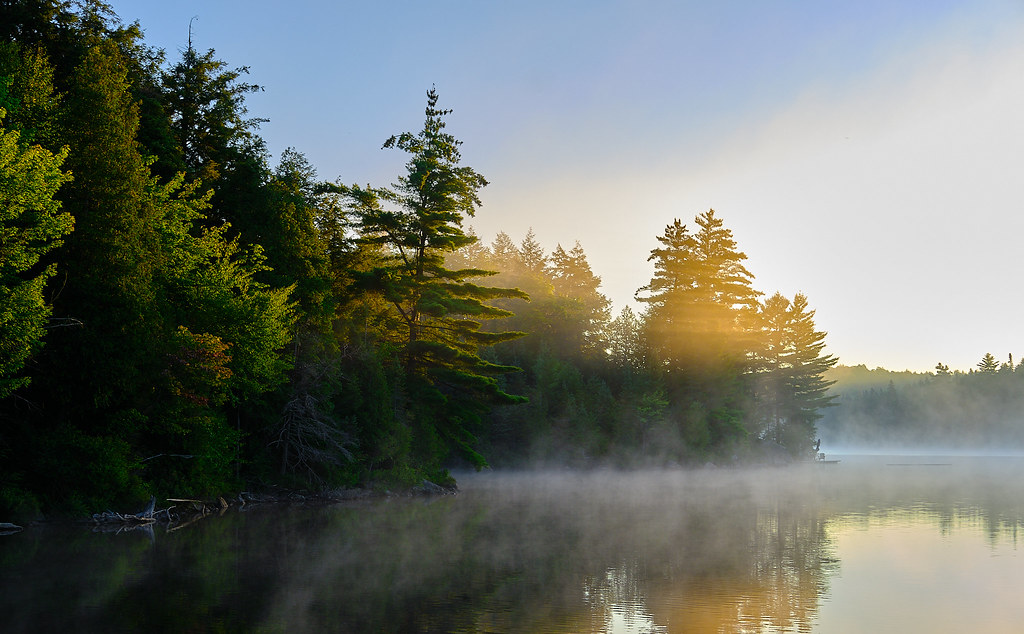
Golden Light on Smoke Lake

Fujifilm X-T2, Fujinon XC 35mm f2

If you're a landscape photographer, you've probably been asked the question 'why the heck are you getting up so early', if your partner, parent or child is a landscape photographer, you're probably the one who asked the question. The other question is always 'so when will you get home', with an answer that's often hours after dark. 

The image above is a partial answer. That image was taken at 6:41AM, and I'd already been shooting at that location for an hour when I took it. I arrived at 5:30AM and was setup 10 minutes later after going digging for a fleece jacket, it was 11C when I arrived onsite. I should have worn pants instead of shorts, August in the bush may be hot, but it gets quite cool overnight when you're that far north, Algonquin Park in this case, I'm less than 40 meters from Highway 60 here.

To get to this location, which is some 250km from my home, I left at 2:20AM after a 2AM wakeup call. Needless to say my partner did ask me if I really had to wake up that early, a thoroughly understandable question. Yes, I did have to. I could not have taken a shot like this without that early departure. 

The sad reality of landscape photography is that so much of your work ends up happening in a pair of roughly 2 hour windows, covering the hour before dawn to the hour after, and the hour before dark to the hour after. That's when the light is the best on most scenes, when there's colour in the skies and also when you get things like mist on the water. 

The challenge to the photographer, especially in the summer when dawn can be before 6AM and dusk after 9pm, is what do you do for the rest of the day. For me, I hike, or I drive around looking for something interesting. There's actually a lot of nature and more intimate landscape work that can be done even in noonday sun when you're in the woods. In fact for some stuff you really only can shoot it during the mid-day as that's the only time you're getting enough light between the trees. I also love stopping at little knick-knack shops, coffee shops and bakeries in small towns, although that's restricted these days with the COVID-19 issues. As such I really do try and avoid people and shops entirely when going out for a day's shooting. 

Napping is another valid option for killing the time between Golden Hours, especially if you're camping. Get the rest when the light is bland, so you can be awake when it's not (or for those moonrise and Milky Way shots at night). 

Thursday, 13 August 2020

Competing Gear Philosophies

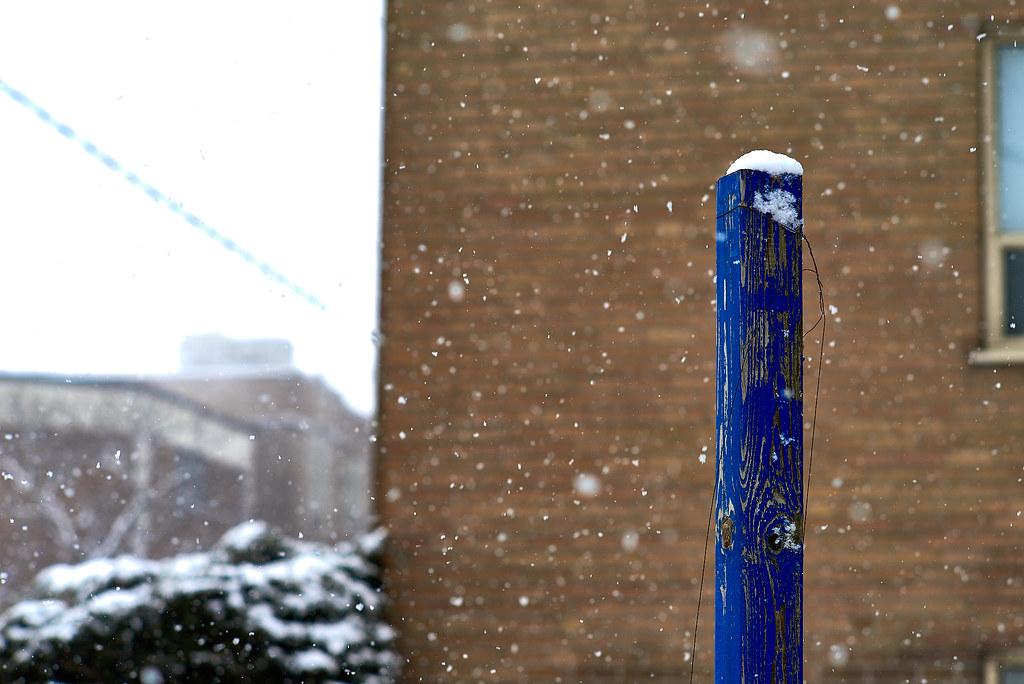
Blue and Snow 

Nikon D800, Nikkor 105mm f2.5

One of my challenges around gear is conflicting philosophies about it.

One one hand I like a setup where I can just grab & go, everything works together and I have exactly what I need in the bag at all times. This is the desire that pushed me into selling my first X-T1 and going Olympus, and why I bought Fuji in the first place.

On the other hand I love neat & odd gear and old lenses. This is why I end up buying into Sony and Nikon mounts.

The challenge is that I can only readily do one of these. Either I have a single consistent kit, or I have a bag full of odd glass that leaves me hauling pounds of gear but having fun buying & shooting weird stuff.

Historically, getting the odd stuff has always meant vintage SLR lenses for me. I think the recent explosion of interesting 3rd party manual glass in mirrorless mounts can readily replace that.

The question then becomes what happens to my Nikon kit. Short term that's nothing, I'll keep it around. But I can see the day coming where I dump the wide & normal stuff for a single mirrorless mount. Only time will tell if that mount is X mount, but it's likely.


Friday, 31 July 2020

The Ever-Present Lure of Film


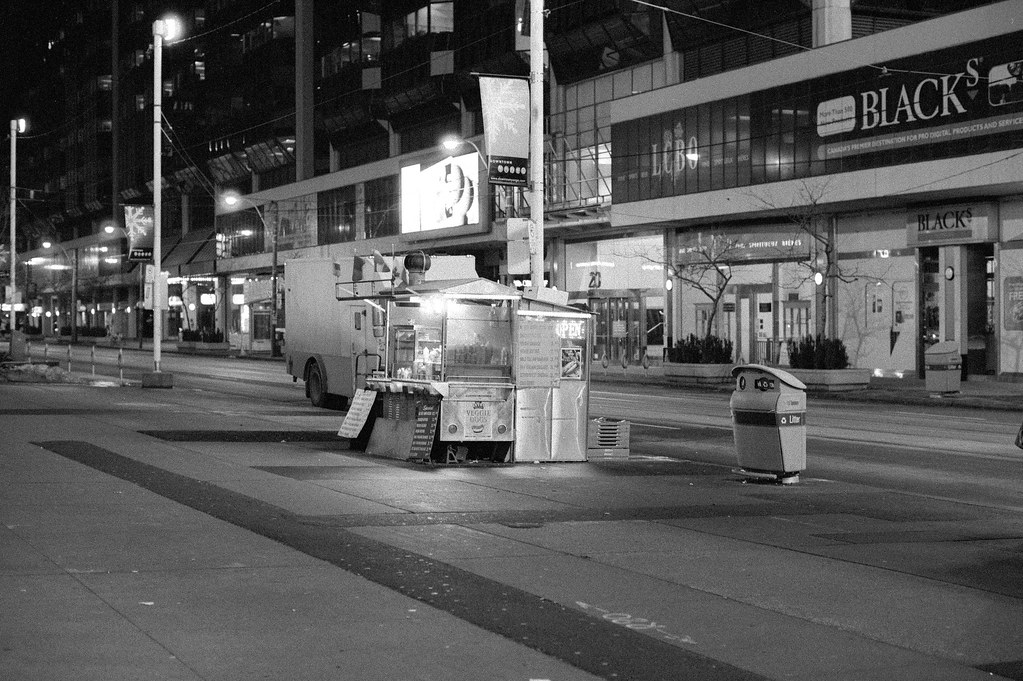
Lonely Vendor
Nikon FM10, Voigtlander Nokton 58mm f1.4 SLII, HP5+

Film continues to be an interest of mine. While I've pretty much stopped shooting it for the last few years, I'm always tempted to come back to it. I've dabbled enough over the last few years that I do still have a backlog of film to process.

There's a few reasons for this. 

First off, I like the cameras and process of shooting film. Manual, mechanical 35mm cameras in particular are just so very enjoyable to use. It's not surprising that I currently shoot the digital system that's closest to a classic Nikon film SLR in UI (Fuji that is, the X-T line is the closest thing ever done to a digital FM2n). I also like classic manual focus lenses. Unsurprising that the vast majority of my lenses even today are manual focus classics. They're just my bag.

Second I like the results. Film just looks good, we've been exposed to the look for so long that it's how we expect photographs to look. This is why Fuji's film simulations are so popular and why there's a big market for film mimicing presets and plugins for post-processing. This is especially true for B&W work, but of late we've seen a lot of attempts to mimic classic films like Kodachrome or Portra. Some of these were even successful (Fuji's Classic Chrome for example is clearly a Kodachrome simulation)

Third, I still do like the process, especially in the case of B&W. While I know find the workflow more problematic than I do for digital, the art of developing remains a meditative experience for me.

The odd thing is that I've never really liked shooting landscapes with film however I've always preferred film as a cityscape medium. That does explain a lot about my move away from shooting film as I've transitioned from primarily shooting Cityscape to primarily shooting Landscape & Nature. 

I really do need to get out and shoot some film. I also should really acquire a second Nikon body so I can load one with colour and one with B&W. I do find having only one body limiting in terms of film choice.

Sunday, 5 July 2020

A Few More Thoughts on the State of the Industry


Three Seasons
A7 II, Nikkor 105mm f2.5 AI-S

Well, it looks like we're headed into the season of major camera announcements.

Olympus just updated their roadmap with a neat new 8-25mm f4 Pro to add to the list of new lenses that have been announced but nobody actually expects to ship anymore, along with the 150-400 f4.5 and 100-400, plus a couple new placeholders for lenses that they can announce but never ship (yes, I'm a little skeptical of Olympus announcements).

Panasonic announced a neat little VLogger-oriented G100 that continues the evolution of their m43 stuff into a primarily video-oriented line as the G line joins the GH line as video-primary bodies, leaving only the GX's as primarily stills-oriented.

Canon has a major event scheduled for July 9th, with 2 new R bodies and a boatload of lenses coming.

Nikon has an expected announcement in late July with at least one Z body and a few lenses expected.

Sony has announced that they're going to announce the long-awaited A7SII replacement sometime soon.

Fuji is rumoured to have two new mid-range X bodies coming, although what those actually end up being is anybody's guess, remember the X lineup includes Fuji's large-sensor P&S models as well as X mount and the X100 line. I'm betting an X-T30 or X-E3 update and a large-sensor P&S.

Pentax actually published a lens roadmap, which has a FF 21mm Limited and a 16-50 update, along with what looks like a super-tele zoom of some sort, all coming in 2020 or later.

So where does that leave us.

For Olympus, some folks expect a new body, I'm one of them. the new body will assuredly be the OMD E-M10IV and it will either be an E-M5III in an E-M10III body (most likely), or a Pen E-PL10 in an E-M10III body (less likely). I think they'll be trying to get down to one sensor across the line, which is why I'm betting on the E-M5III being the basis for the E-M10IV, making the 20MP sensor common across the OM-D line, with the last PEN standing being the only outlier. They need to ship some of the lenses they've announced, but I'm not betting on that as I suspect that they simply won't have the income stream to support production of these new lenses.

For Panasonic, I'm expecting a GH update at some point, but the real news would be a compact L body to go with the brilliant little 20-60 zoom they just announced. A 70-300 for L mount would be great from either Sigma or Panasonic. The 20-60 just doesn't make sense without a compact body to mount it. An off the wall possibility would be an L mount GH body, using an APS-C sensor. All this is speculation though, as nothing has hit the rumour mill yet.

Canon is making its play now to become as dominant in FF mirrorless as it is in crop (yes, EF-M is actually the best-selling crop system as it sells a lot of low-end bodies). The R5 and R6 look to be major winners if they can deliver the promise of their spec sheet. And there's a ton of lens accessories coming, including TC's and new super telephotos. Given that EF lenses adapted to R mount deliver basically native performance, this will put Canon in the drivers seat in a lot of ways unless Sony has an october Surprise waiting. Canon's answer to how to get amateurs on a limited budget to buy FF seems to be 'sell them the RP and cheap & slow lenses', which in a lot of ways is the right answer. The R is expected to drop in price to $1599US list, meaning it will almost assuredly be a $1200 body on sale this fall. This is IMHO the right play for Canon. They're getting aggressive on price, accelerating lens releases and using their installed base well via the adapters, including some unique features (like filters on the top-end adapter) to grab back the EF shooters who have been adapting to Sony FE bodies. They just needed a better fleshed out lens line and competitive bodies and July 9 seems to be on track to deliver both.

Nikon's expected announcements are much smaller. Then again, so is Z mounts relative success. Honestly Nikon delivered a better pair of bodies than Canon did, and a better thought out lens line, but got hauled over the coals for idiotic decontenting (no vertical grips, single card slots), a lack of useful fast lenses (and the f1.8 S lenses were expensive and large), a card format choice at odds with what the market wanted (XQD on the Z6 instead of UHS-II SD) and pricing higher than the comparable F mount body. Unsurprisingly Z hasn't been a sales success, and the Z50 just added to that, as it didn't even have a real lens line to go with it, and was too expensive compared to the X-T200 and A6100 it competes with  (it's just not quite enough body to compete with the X-T30 and A6400). So we're getting what appears to be a Z5, which is rumoured to be basically a Z6 with dual SD cards and some light decontenting, plus a few lenses, most notably a 50/1.2 and a 24-50 zoom, with the latter likely being a ultra-compact zoom. This will need to be priced at or below the EOS R's new pricepoint to move, so Nikon will actually have to be competitive on price for once. Nikon reportedly has a Z30 in the pipeline, but again, that's going to have to be D3500 money to move. Nikon needs to get aggressive and is showing few signs of it, they can't rest on their name and the F mount installed base, especially when the adaptation of F mount lenses is such a crapshoot, the reality is that screwdriver AF lenses are basically as usable on any other mirrorless system as they are on Z, and that's still the majority of AF Nikkors out there.

Sony needs to get the A7SIII out the door. They also need to get an A7IV out the door, and frankly that needs to have more significant updates than the A9II or A7RIV got, or Sony will find itself in the same boat both Canon and Nikon did when Sony dropped the A7III, where their new body is competing against older, cheaper bodies in spec. Sony also needs an A7000, or to go all-in on consumer FE mount and start moving the top end of their APS-C market to FF more aggressively (the rumoured A6 could do that if it's basically an A7III in an A6600 body). The latter requires some FE zooms though. Sony really needs a plan on their lens releases, rather than the current semi-random releases. They're filling gaps, but they keep releasing less needed lenses instead of more important ones, for example they need an FE 70-300 for a reasonable price to go alongside the FE 28-70, and it could easily have replaced the E 70-350 which while a brilliant lens, is not something the lineup actually needed (the 70-300 G covered the need for an overpriced 70-3xx lens well enough). Basically Sony needs to honor the threat from Canon and also start  acting like they have a plan for the system, not their current spaghetti model of releases where they throw lenses at a wall and see what sticks.

As to Fuji, they're in a good place overall. Olympus's slow walk out of the market has left Fuji as the only real option for the serious crop stills shooter. That said, they need to respect the stills market a little more. The X-T4 is a great body, but it pissed off a lot of stills shooters who feel with good reason that it gives up stills-oriented handling for better video capability. Combine that with the mixed reception that the X-Pro3 got and they really do need to communicate their dedication to the stills shooters. Additionally they need to start updating older lenses with faster and quieter AF motors and aperture mechanisms and weather sealing. They also need to bring weather sealing to the lower-end bodies. Frankly, Fuji has a real chance here to replace Olympus as the go-to bodies for poor condition shooting and should jump on it. Fuji also needs to release some telephotos. The XF 70-300 is a start, but Fuji's real weak point right now is their single current lens over 230mm long. Crop gives them a pixel density advantage to start with, and they have solid AF, they just need glass to match.

Pentax? What Pentax? They have lenses coming, they have 3 solid bodies, they have almost no userbase left. Frankly Pentax's one ray of hope is the fact that they're in a position to outlast Nikon as the other DSLR system alongside Canon as all Pentax needs to do is not lose too much money to annoy Ricoh, Nikon actually depends on its camera division to keep the company afloat.


Thursday, 25 June 2020

So Who Survives? Deathrace 2020 Camera Maker Edition


Tree on the River
D750, Laowa 15mm f4 Macro

With yesterday's news about Olympus, the next question that comes up is 'who next?'

It's a safe bet that Sony and Canon will stick around. Both are large corporations for whom cameras are a sideline. Sony could abandon the market if the numbers don't make sense (JIP, who is taking on the Olympus Imaging group made their name taking over Sony's PC business when Sony abandoned it). Canon however is a safe bet. They're an imaging company at the core and the camera business is synergistic with the rest of their business, plus it's core to their corporate identity (they started as a camera company). Unless it becomes a boat anchor, Canon will continue to make cameras.

Fuji is also in the same boat business wise as Canon, and I expect they're safe. Based on current CIPA numbers, they've also been the most insensitive to market contraction over the last 8 years, showing steady and significant growth every year through 2019 and the only maker without double-digit contraction between 2019 and 2020.

As to Panasonic, I also expect them to stick around. They're a huge player in video and they gain a lot from their stills cameras for hybrid shooters. Don't be surprised if they move m43 to a pure video platform as they become the only major player though. For Panasonic L makes more sense for stills if they can bring out some cheaper & smaller bodies and lenses. Their 20-60 is an amazing start and needs a SX body to match (where SX is the L equivalent of the GX series).

Ricoh/Pentax has too many camera brands and too little sales. Frankly I can't understand why the Pentax brand isn't either already gone or now the parent brand for all Ricoh cameras. I don't see this business group surviving 2021. However it is just a hobby for Ricoh, so anything is possible. If it sticks around, I see a transition to online sales only.

Hasselblad and Phase/Mamiya? Fuji is eating their lunch at the low end of the MF market. 'Blad is just a luxury brand for DJI anyways and Phase's software business keeps them in the game, but I see them likely killing the Mamiya branding at some point. I see the MF market becoming basically Fuji at the low end and Phase at the high end.

Leica? Their business model is solid as long as there are people who are willing to pay for Veblen goods. That also provides an anchor for the L mount alliance. Not going anywhere except to higher pricetags.

Sigma? Cameras are not a business for them, but a hobby, so they don't care as long as the camera business is small enough to not impact the lens business. Their lenses are the other anchor for L mount.

Now the big question mark. Nikon.

Nikon is traditionally one of the major players. But with the transition to mirrorless they seem to be condemned to fail. Nikon 1 was a slow motion disaster. Z on the other hand is pretty good as a system from a technical standpoint, but the combination of bad pricing, the poor decontenting decisions that have plagued Nikon since the D7500 launch, the DX Z line might as well not exist right now and just plain bad communications (Nikon not addressing complaints and not listening to users) have kept the Z stuff on the shelf rather than out in the wild. 

Nikon simply needs to get their crap together. They're acting like they have years to transition to Z. They don't, they need to get Z moving ASAP or they simply will never make it to the point where Z is carrying their imaging group. Essentially Nikon needs to move the consumer sales to Z ASAP, then clean up the pros and wildlife guys later. That needs them to move on DX Z much faster, get the Z5 out for an aggressive price and make Z lenses that are economic (the f1.8 primes are VERY good, but the 35, 50 & 85 are too expensive compared to the G's and not really smaller, and the 20 & 24 aren't any better than the G's). They've spent too much time chasing margin and forgot that margin doesn't matter if you aren't moving boxes. 

Nikon isn't dead yet though. The rumoured Z5 could kickstart things if its priced aggressively and paired with some reasonably priced lenses (aside from the 24-70/4, which is a great kit lens). A 70-300, an 18-35 and the compact primes can all fill this gap. I'll freely admit the Z5 is on my radar as something to pair with my D750 in a way the Z6 simply isn't, if only for the SD cards. I see no reason to invest in XQD/CFExpress today as they bring no meaningful gains for my work, while having significant cost and compatibility issues.

I don't see hope for DX at all right now though. It's too little, too late. I cannot see any real reason to bother when Fuji, Sony, Canon and Panasonic all have full systems here. Nikon can't rely too much on legacy glass, especially in the DX market where they already are a decade behind where they should be on lenses for F mount.

Thursday, 18 June 2020

Some Thoughts on Photography


The Takeout
D750, Laowa 15mm f4 Macro

This post is going to be a little different. It's not about gear or technique, or even my experiences on my most recent photo excursion.

It's about why I make photographs in the first place.

A friend asked me something recently that got me thinking about this.

Now I'm a very social photographer. I like talking to other photographers about photography and related subjects and I enjoy taking photographs of my friends and others when I'm around them. Photography has long been a way for me to connect with people, something I sometimes struggle with due to my generally introverted nature.

However I am quite solitary when making photographs.

Now that sounds like a contradiction, but it isn't. The process of photography can be very social for me. However the art of making photographs for me is all about solitude. 

When I'm doing social photography I'm taking photographs for sure, but they are candids and grab shots, intended solely for sharing amongst the group in question and part of the social interaction of the group I'm with. It's also something that's both allowed me to connect with people I'd otherwise have difficulties relating to (like classmates 10-15 years younger than me when I was in University) and staying a little aloof when I was uncomfortable. I've found many valuable friendships this way, including some of my most enduring and valued friendships.

When I'm making photographs however (and note 'making' vs 'taking' here), it's always an exploration of my solitude and disconnection from the environment around me. I've never felt at home in large cities and my move from taking snapshots to making photographic art was largely built on an attempt to connect to Toronto, the city I've spent pretty much my entire adult life in. It's something I failed at doing, but I learned a lot and built a body of work which explores that isolation I feel with regards to Toronto. That is in a large part why I started calling this part of my work Cityscapes rather than Street Photography (I'm not the first to use the term by far, but I did come up with it on my own). It's not about the people, it's the city itself I'm shooting and the city I find myself isolated in. 

Likewise Landscape photography for me is also about isolation, but it's the inverse experience. I find a connection to the landscape when I'm isolated from others and from signs of human influence. This is especially true when shooting the BC Interior and the Canadian Shield, two landscapes closely tied to my childhood and teen years. And I believe this is also why I've rediscovered my love for photography as an art form and a process as I've moved to shooting primarily Landscape work, because with Landscape work I can relish my connections to nature and the wilderness rather than my photography being a failed search for a connection to a concrete jungle that I just can't relate to truly.

This fundamentally also explains why there's such a lack of images  on my Flickr from the many photo walks and other events around people. My Flickr has very much become the home for my serious work, and that has steadily progressed from dabbling in street photography and snapshots to a more serious body of Cityscape and Landscape work. It also makes me wonder if I should cull some of the less related work I have on my Flickr that didn't get culled largely because of its popularity.

Monday, 15 June 2020

Thoughts on Hiking and Gear


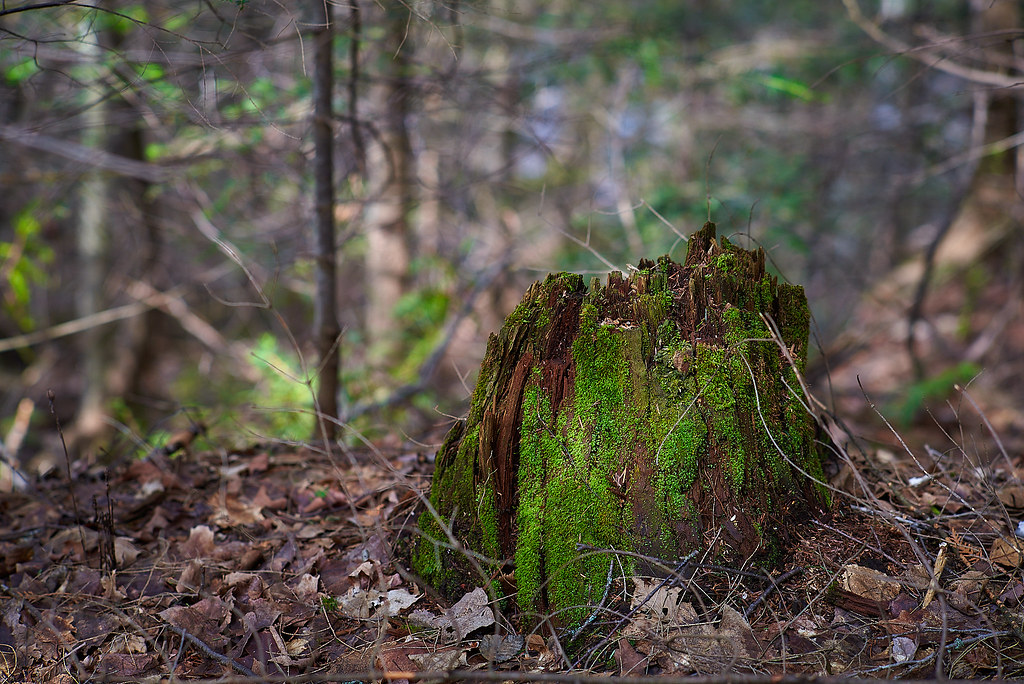
Mossy Stump
D750, Nikkor 105mm f2.5 AI-S

Yesterday marked the third major hiking outing of the year, and the first one after I acquired a proper usable backpack and finally ditched the sling packs.

Yesterday was a 9.5KM hike (out of a total of 15.5KM walked in total yesterday, for just under 20k steps). That was a bit of a change vs previous multiple shorter hikes, where I'd gone 4-5km at 2-3 different sites. 

The key enablers and limiters here were water and the pack itself. With the backpack I can carry up to 4 bottles of water along with my gear. I was carrying 2 bottles yesterday and as it was an out & back, I turned back when the first bottle was empty. That was a good choice as I turned out to be at my limit for steady hiking when I got back to the car.

As to the pack, it was significantly better for carrying gear into the bush. There was one issue, strap slide, which means I need to get a chest strap to prevent the shoulder straps from sliding out. That proved to be somewhat irritating later on the hike as the straps rubbed on my underarms as a result. 

One other takeaway is that I carried way too much gear. I had the D750, Platypod Ultra with head, Manfrotto 293M4 with head, Laowa 15mm f4 Macro, Nikkor 20mm f2.8 AF, Nikkor-H 28mm f3.5, Nikkor 35mm f2 AI, Yongnuo 50mm f1.8, Nikkor 105mm f2.5 AI-S, Nikkor 70-300 f4-5.6 ED AF-D, a set of extension tubes, the basic accessories (adjustable ND, polarizer, remote, lens cloth, etc), 2 water bottles and a couple Cliff bars.

That's simply too much gear for what I was doing. I didn't even use the 35, 105 or extension tubes and mostly shot with the 70-300D and 20 (in that order). The reality is that I could have ditched the 105, tubes and 2 of the 28, 35 and 50 could have been left at home, really I could have gotten away with just having the 35. Probably also could have left the tripod and carried only the Platypod, but that's so situational that I really do need both.

Wednesday, 10 June 2020

Some Thoughts on System Selection in 2020


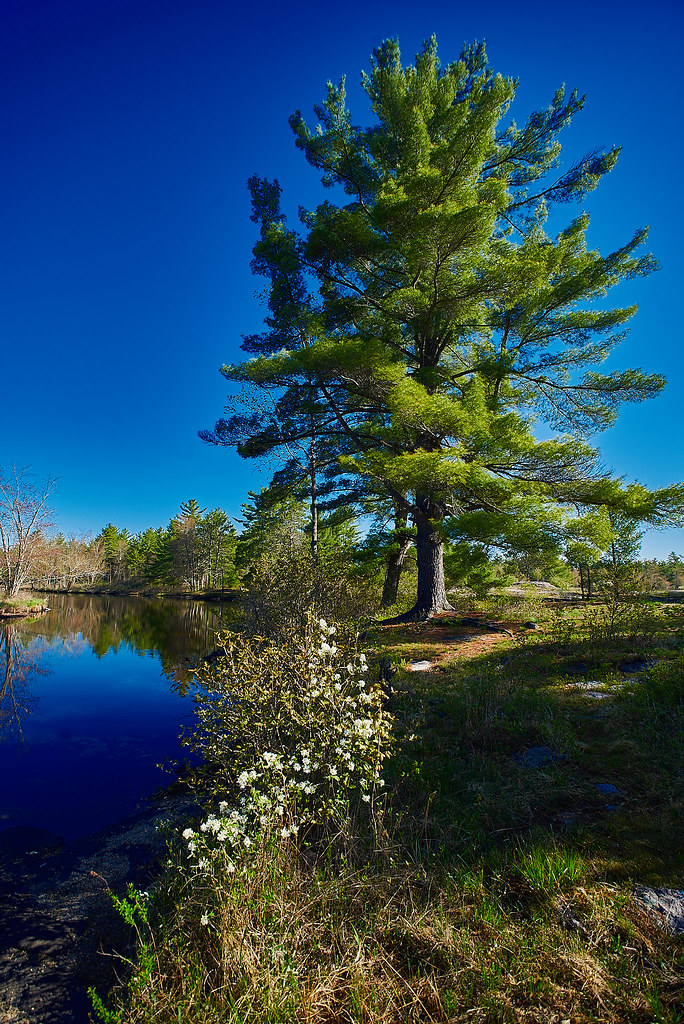
Youth and Age
D750, Laowa 15mm f4 Macro


I've long been a proponent of the idea that Full Frame was largely cost-ineffective for the photographer with any sort of mild budgetary constraint. However I'm rapidly changing my mind on this for a few reasons.

1. Crop DSLR's are basically abandoned by their manufacturers. Seriously, when was the last serious lens introduction for APS-C DSLR's from Nikon, Canon or Pentax?

2. Chinese lens manufacturers are making dirt cheap lenses for FF DSLR & mirrorless mounts that range from adequate to excellent. They're doing very little for APS-C DSLR's. The cost advantage for APS-C was always mostly in the lenses, that's rapidly fading.

3. Only Fuji, Olympus and Panasonic take crop mirrorless seriously. Of those 3 only Panasonic even sells FF and the L mount is the least cost-effective FF mount out there (even M is cheaper to shoot for the budget-conscious and frankly GFX can be cheaper to shoot than L mount). Canon's system is a dead-end and consumer focused, Sony throws some spaghetti periodically on lenses (like the excellent 16-55 and 70-350 last years) but couldn't be bothered to make a serious body. 

So, if you're shooting on a budget, where should you look to get started.

1. Nikon 24MP bodies, or Canon 6D/6DII's. They're cheap on the used market, especially the D600 and original 6D. They're very good for most uses. They won't make cheap glass look bad unlike the higher-MP bodies (especially D8x0's). 

Don't be afraid to use manual focus lenses. There's now a wide selection of inexpensive and decent new manual focus lenses, ranging from high-end Zeiss to mid-range Irix and Venus/Laowa, to inexpensive Samyang/Rokinon and even dirt cheap stuff like Neewer and 7Artisans. Plus Samyang/Rokinon and Yongnuo are doing cheap AF glass too. The limitation here is that you're pretty much stuck with primes if you want cheap & decent. Nobody does good zooms in the same pricerange.

2. Fuji or m43. Great and not too expensive 1st party glass, lots of cheap 3rd party stuff. Nice bodies. You may find the RAW file quality limiting on m43 (I always seem to find it good, right until I need the advantages of RAW over JPEG, then I hit a wall) and may run into some RAW conversion challenges with Fuji. Lots of good used gear as well, and Fuji's 24MP bodies in particular are both reasonably priced on the used market and very good. Buy plenty of spare batteries though.

3. Sony A7 II/A7R II. Cheap on the used market, good IQ, even can be had new for surprisingly low money. Lots of cheap & decent glass. Adapts well and smart adapters for EF and Nikon F mounts exist (even can be cheap in the case of EF). 

Lots of cheap lenses are the real win here, and you can readily mix & match systems to adapt. I do recommend picking one or two systems max for adaptation though, otherwise you end up with a dozen random adapters on various lenses.  All the same players as F and EF mounts, plus a couple extra randoms. 

4. Canon EOS RP. It's cheap new, basically a mirrorless 6DII, and is very adaptable. Downside is there's basically two affordable 1st party AF lenses (the 24-105 STM and 35 IS macro) but unlike Z mount the DSLR adapter is cheap and there's actually 3rd party support starting to show up. This is a great solution for adapting if you want a better UI than the Sony mII bodies deliver. Downside is that the sensor is barely competitive with APS-C for Dynamic range, although it had FF high ISO performance. Skip the R though, the upcoming R5 and R6 will make it irrelevant and the R6 should be basically the same price.


To avoid:

1. Nikon Z. FX is expensive with zero 3rd party support, DX might as well not exist (1 body, 2 kit zooms). Nikon somehow made adapting even non-CPU F mount lenses a worse experience than their DSLR's despite adding IBIS. FX is a good system, just not for the budget-conscious, DX might as well not exist.

2. Canon EF-M. While this is the best-selling mirrorless mount in terms of units sold, it's purely a consumer mount with no growth potential. It does have 3rd party support, but not as good as Sony or Fuji. 

3. Pentax K, Sony/Minolta A mounts. Both are undead and have almost no actual support. A pity since the K-1 in particular would be a brilliant do-everything body for the budget-minded shooter if you had a better lens selection (That said, if you can get K mount lenses that work for you, the K-1 is a solid choice).

4. L mount. Expensive. Nice. Expensive. REALLY nice glass. With a side dose of Huge and Expensive. 

5. Nikon F DX, Canon EF-S. Unless you are a long-lens shooter on a real budget, there's no point to these mounts anymore. A good body isn't really much cheaper than a FF body, and lens selection is poor at best now. For wildlife/sports shooters on a budget only (and they shouldn't look at anything other than a D500, 90D or D7500 in that order)


Sunday, 24 May 2020

Some Random Thoughts

Sunrise on 115

D750, Laowa 15mm f4 Macro


So with the lockdown easing up, I've had a chance to get out and do some photography over the last week. Hiking and Landscape Photography is just about the ideal Social Distancing activity, you don't want to be around people in the first place.

As such, I've taken a fair bit of images in the last week. I did one run up to the west end of Algonquin Park (the image above is from the side of Highway 60 in Algonquin Park), then did a loop northwest of Huntsville and down into Rosseaux and south from there. All but a couple images were shot with the D750. Maybe 5km total hiking, and a bunch of from the car shots. Came back with around 350 images, of which 30 or so were worth further looks.

Then I did a Kawartha's run yesterday. Gannon's Narrows Conservation Area, Mississauga River Takeout trail in the Kawartha Highlands PP, Petroglyphs PP (one of the day loops, as the Petroglyphs site is closed), and finally Warsaw Caves (just the lookout hike, as the Caves themselves are closed). 16+km of hiking total and about 700 images split 50/50 between the D750 and the Fuji's.

A couple takeaways:

1. 16km this early in the season is pushing it hard for me. I was in rough shape when I got home. One heck of a workout though. 

2. I need a better pack setup. sling packs are not suitable for more than a short hike and my only camera pack sucks horribly (there's a good reason it's been left in the closet for over a decade). Also I was short on water on the last hike. Going to see if my old Deuter hydration pack can be made workable for photography usage.

3. I'm very glad I finally bought a Platypod. Could have used it many times on both days. Too bad it showed up today (Amazon? Why an 8:22AM delivery on Sunday though?)

4. I like carrying the Fuji's better. I like processing the Nikon files better. This kinda makes me want to try a Z50 even if it doesn't have a native small, fast prime. Frankly, I just like the Nikon colours (Oly colours are similar). The Fuji files are good, and hold up better than the Oly files, but lets be honest, I have to do too much work to get them where I want them in terms of colour for landscape/nature work. I'll keep the bodies, but that's for street/city shooting mostly where they work VERY well for me and where primes are a better option anyways. 

5. I need to optimize my kit for hiking. As much as I enjoy primes, I missed shots because I didn't have zooms on the camera. 2 zooms and 2 primes seems likely right. (Laowa 15, a normal, UWA zoom, telezoom).

6. Even though I really could use an 18-35 for the Nikon, the Laowa 15/4 is a delight on both the D750 and the X-T1. Really wide, and that close focus ability is insane. Got some really interesting shots thanks to the combo of really short MFD + UWA (seriously, MFD is basically the surface of the protective filter, and yes I actually have a UV filter on it because of this, WAY too easy to scratch the front element otherwise). 

7. I need to use my tripod more. Especially if I'm giving up lens speed via using zooms.

8. In the meantime, I need to pick a 3-4 prime set from the bag and stick to that for the D750. 15 & 105 are a given, 28 & 55 maybe? or 28 and 50. Makes me wish I had a 135/2.8, as that would give just a touch more flexibility than the 105 does. Alternatively just carrying the 15, 35 and 70-300 is a possibility although the 70-300 is just a mediocre lens, even if it can be acceptable.