Sunday, 23 August 2020

More Random Thoughts on the A6300

The Path is Lined

Fujifilm X-T2, 7Artisans 12mm f2.8

I got out yesterday for a hike on the Seaton Hiking Trail with the A6300, giving me a chance to really use it for more than just some neighbourhood flower shots. With 340-ish shots on it, we're still in New Toy mode. 

Frankly, it's clear that I was not giving the A series APS-C cameras a fair shake. I've been avoiding them for a while largely due to my mixed experiences with the earlier NEX bodies, specifically the 3 different NEX-5 variants I've owned and the two NEX-7's. 

The A6300 was the mid-range body of its generation, sitting between the older A6000 (which replaced the NEX-6) and the slightly newer A6500. The A6300 was for all intents & purposes the NEX-7 replacement body, delivering the build & EVF experience that a NEX-7 user would not have found on either the NEX-6 or the A6000. 

Compared to Fuji, it really sits in between the X-T20 and X-T2 in terms of capability, but is closer overall to the X-T20 in features and target market. Sony's flagship of this generation was the A6500, which featured IBIS and a truly impressively deep buffer (100 RAWs vs 48 max for the X-T2) plus a touchscreen, vs the better sealing, pro-grade shutter (1/8000 mechanical, 1/250 sync) and higher max fps (14 vs 11) of the X-T2, plus the X-T2's bigger finder (0.77x vs 0.71x for the Sony's). Interestingly, both Sony's were priced between the X-T2 and the X-T20, with the A6500 coming in a little below the X-T2 and the A6300 coming in just above the X-T20.  The pricing really does reflect the relative capabilities of these bodies, aside from AF performance, the A6300 and A6500 took the APS-C Mirrorless AF performance crown back from Fuji and have kept it ever since.

In terms of ergonomics, the A6300 is better than I expected, as I noted in the last post. I do like how many options Sony made assignable to buttons, there's about 50% more options that are assignable compared to on the Fuji's. You do have less buttons to assign to, but the switch allows you to overload one of them. The lack of a MyMenu is annoying, but Sony's Fn menu is more configurable than Fuji's Q menu. 

Sony's JPEG's are decent out of the box, but you're very limited on how you can tweak them (contrast, saturation & sharpening only) and there's no custom slots unlike Fuji or Nikon. Sony, you REALLY can do better here. The defaults are good, and there's actually more options there including some very specific ones (Autumn Leaves, Sunset) but the lack of tweaking limits you compared to the Fujis or Nikons.

Auto ISO is better than on older Sony bodies, but you still need to set a custom speed for lenses which need a speed higher than 1/60th if they're not electronically coupled. Luckily this is assignable directly to a switch (On Fuji, you can assign Auto ISO options to a switch and dive into a second menu from there, or put Focal Length on your MyMenu, which also writes EXIF and lets you leave Auto ISO on Auto shutter speed. Sony's quicker, Fuji's more powerful).

For IQ, frankly the RAW's aren't quite as good as the Fuji overall, as they're 14-bit lossy compressed (12-bit in continuous) and I like the default colours less. That said, there's more room to recover in the highlights on the A6300 than on the X-T2, meaning I can bring back sky using my Nikon D750 presets without too much issues. The Sony's are losing more data in the shadows from the compression and the shifting of 1EV or so of data into the highlights. Also the green rendering is closer to the Nikon's so it's easier to get that punchy green and deep blue look for landscapes that I love. Can't quite get the Nikon Indigo's yet, but I think that might be achievable from the Sony files, it's not on Fuji. 

I did a quick ISO test to see how the different bodies metered. I set the X-T2 to ISO 200, mounted my Nikkor 50/1.8D set to f5.6 and got a shutter speed of 1/1250. Swapped the lens onto the A6300 and matched the shutter speed at ISO 160. Then I swapped it onto the A7II and matched shutter speed at ISO 125. I was metering against blank sky with the same aperture, so the Field of View differences between the A7II and the two APS-C bodies shouldn't matter, at f5.6 there's little vignetting on the Nikkor so that shouldn't have affected metering either.

The takeaway from this is that there's about 1/3 stop difference in how the two APS-C bodies meter and/or rate ISO. That gives me effectively 2/3rd a stop lower ISO range on the A6300 (base of 100 vs 200 on the X-T2), which should be good for longer-exposure work when shooting rivers & streams. Combined with the extra RAW headroom in the highlights, I should be able to worry less about blowing highlights when shooting the Sony vs the Fuji.


Saturday, 22 August 2020

First Thoughts on the A6300

Watered

Sony A6300, Sony E 16-50mm f3.5-5.6 OSS PZ

I had to make a quick run to the local grocery store last night, which gave me a chance to try out the A6300. Mostly I shot with the tiny 16-50 Power Zoom that's been the kit lens for all the APS-C Sony bodies since the late NEX era. Note I've owned the older 18-55 OSS with my first couple NEX's (the 5N and 7) and didn't like it much, it was too big and no great shakes optically. 

I was pleasantly surprised by how comfortable the grip is. The camera is a soapbox with a grip, and it's not a large grip, but it fits my medium-sized hands reasonably well. The thumb rest could do with some more definition, but that's all I can complain about.

I was also surprised by how thick the bodies are. After owning several NEX's, I was expecting pretty similar form factor (despite the pictures making the body changes obvious). The A6300 body is about twice as deep as the NEX bodies, including the 7 and that brings 2 real changes to the handling. The first is the palm section of the grip becomes much deeper, which is a good thing. The second is that there is now some actual surface for a tripod plate to stabilize against.

None of the NEX bodies paired well with tripods because of how unstable the plates were (the NEX-6 started to get usable, but I found I had to use adapted lenses on the NEX-7 when shooting on a tripod if only to be able to use the much better tripod feed on the adapters, particularly the LA-EA1 I used with my selection of A mount glass back then)

Control layout is good for the most part. The AF/MF+AEL button/switch combo is better located than on the A7II, and that makes it more useful as AF-On. C1 and C2 are in lousy locations though, C2 is basically unusable when holding the camera in shooting position (same issue with C4 on the A7II which is in the same spot) and C1 is just awkward. As such, I threw AE Lock on C1 (as I don't use it that much) and the Auto ISO Minimum Shutter Speed onto C2 (C4 on the A7II is Focal Length for manual lenses, but since Sony only uses that for IBIS and the A6300 doesn't have IBIS, that's not an option on the A6300). For the switch, in AF/MF I set it to AF-On, in AEL the button is Focus Magnification, so I can just flip the switch when using manual focus lenses. I disabled the movie button outside of movie mode, but sadly Sony still doesn't make it assignable in this body (better than the NEX-7 initially, but Sony added the disable there via firmware update and nothing has changed since then). I wish it was dual-wheel like the NEX-7 rather than having a mode dial, I was fine with Mode as a menu item, but most people do change Mode a lot more than I do (and I only really use 2 modes anyways, A & M)

Performance is good. The camera is responsive in most regards, although it does feel slower than the X-T2. Frankly, in terms of responsiveness it feels a lot like the X-T1, very good but not outstanding. AF is a little odd, it feels slower than the X-T2 (for the little AF shooting I've done), but it definitely tracks much better. I think the actual single-shot AF lockon time is a touch slower, but the AF tracking (and thus Video and AF-C performance) are decidedly better. Face detect is usable (it's not on the X-T2).

One thing I've missed from the Sony's is that they auto-switch to Manual Focus mode when mounting a manual lens or non-electronic adapter. One of my few annoyances with the Fuji's is you have to still flip the focus mode switch to M to get access to the manual focus assists, and that switch is awkwardly placed on the front of the camera (one of the few cases where I wish Fuji would ditch the dedicated physical control). This is minor, but it was a delight when I mounted my Nikkor 105/2.5 and realized that the camera went into MF mode by itself. I don't mind automation when it does the right thing.

As to the 16-50, it's impressively unimpressive. I can't think of a lens I've shot with that's as thoroughly mediocre without annoying me. Now I don't really like Power Zoom, but this thing is a pancake when retracted so I'll give it a little there. It's optically unimpressive, not bad, just not good either. Acceptable seems to have been the design requirement and they've hit it dead on. The one thing I will call out is that the close focus performance at 50mm is pretty good. I was expecting it to be mediocre, much as the FE 28-70 is (with 0.45m at 70mm), but it gets down to 0.3m at 50mm, which is actually very good for any 50mm non-Macro. 

Now I generally found the FE 28-70 to be a decent and arguably underrated lens, and optically I'd say it's visibly better than the 16-50, but the 16-50 is noticeably wider, a touch longer and just more flexible thanks to the closer MFD. 

At the end of the day, the 16-50 is an acceptable kit lens and a useful bag lens thanks to adequate performance, low cost and utterly tiny size when collapsed. Plus being Power Zoom, it collapses itself like Fuji's 15-45 but unlike Nikon's 16-50 or Olympus's 14-42 R. Sadly it's not the gem than the Oly 14-42 EZ is, but again, it's acceptable, cheap and tiny. Very useful as a small lens for light carry or light video work on the APS-C or A7R series bodies (in crop mode for the latter)

Thursday, 20 August 2020

Sometimes I Hate My Brain

West Duffins U-Turn Fujifilm X-T2, 7Artisans 12mm f2.8 

My brain's been telling me it's time to get rid of the D750 for a while now. I've been unable to stop thinking about what the next option should be. I've been happy with the D750, but I'd like to get back to a setup where I have more mount adaptation flexibility.

Today I finally settled on that. For now it's a mixed Sony/Fuji system, we'll see what the future holds.

One of the drivers of this was knowing that my high-mileage D750's value was facing a cliff. As DSLR's drop in value on the used market, high mileage ones, like my 235k D750, drop further and faster. I was given the option to sell the D750 for basically what I had in it and took it. I also dumped 3 of my Nikon lenses (both AF zooms and my Yongnuo 50/1.8N) and the mostly unused Fuji X-E2 body (it just kept getting left at home in favour of the X-T1, X-T2 or both). I've retained the rest of the Fuji kit and all the Nikon MF lenses plus the 20/2.8 AF.

What did I get? An A6300. I still can borrow my partner's A7II when I want to shoot FF and I've never owned any of the non-NEX APS-C bodies. There's a wide variety of lenses available for it, many of which are not available in X mount and it has performance largely similar to the X-T2. I'll no doubt get another FF body at some point in the not too distant future, hoping it will be an A7III next time. This nets me a relatively high performance APS-C body to partner with an FF setup, as well as the ability to share batteries/lenses with my partner when we're out.

I'm not getting rid of the X-T's though, I enjoy them too much. Even if I was to do some sort of trade-in on a new body, I'd keep the X-T1 and the 7Artisans lenses. They're fun and not worth getting rid of.


Wednesday, 19 August 2020

2AM Wakeups

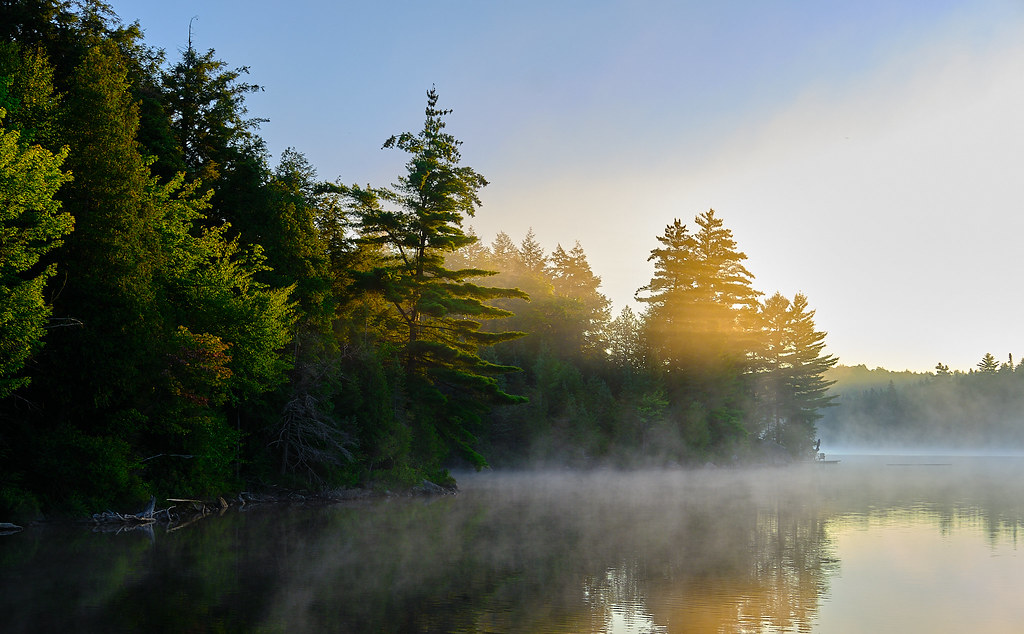
Golden Light on Smoke Lake

Fujifilm X-T2, Fujinon XC 35mm f2

If you're a landscape photographer, you've probably been asked the question 'why the heck are you getting up so early', if your partner, parent or child is a landscape photographer, you're probably the one who asked the question. The other question is always 'so when will you get home', with an answer that's often hours after dark. 

The image above is a partial answer. That image was taken at 6:41AM, and I'd already been shooting at that location for an hour when I took it. I arrived at 5:30AM and was setup 10 minutes later after going digging for a fleece jacket, it was 11C when I arrived onsite. I should have worn pants instead of shorts, August in the bush may be hot, but it gets quite cool overnight when you're that far north, Algonquin Park in this case, I'm less than 40 meters from Highway 60 here.

To get to this location, which is some 250km from my home, I left at 2:20AM after a 2AM wakeup call. Needless to say my partner did ask me if I really had to wake up that early, a thoroughly understandable question. Yes, I did have to. I could not have taken a shot like this without that early departure. 

The sad reality of landscape photography is that so much of your work ends up happening in a pair of roughly 2 hour windows, covering the hour before dawn to the hour after, and the hour before dark to the hour after. That's when the light is the best on most scenes, when there's colour in the skies and also when you get things like mist on the water. 

The challenge to the photographer, especially in the summer when dawn can be before 6AM and dusk after 9pm, is what do you do for the rest of the day. For me, I hike, or I drive around looking for something interesting. There's actually a lot of nature and more intimate landscape work that can be done even in noonday sun when you're in the woods. In fact for some stuff you really only can shoot it during the mid-day as that's the only time you're getting enough light between the trees. I also love stopping at little knick-knack shops, coffee shops and bakeries in small towns, although that's restricted these days with the COVID-19 issues. As such I really do try and avoid people and shops entirely when going out for a day's shooting. 

Napping is another valid option for killing the time between Golden Hours, especially if you're camping. Get the rest when the light is bland, so you can be awake when it's not (or for those moonrise and Milky Way shots at night). 

Monday, 17 August 2020

A Good Hike, and Peak Design Changes My World Again

Lilies and Grass

Fujifilm X-T2, Fujinon XC 35mm f2

Saturday was a very early day for me. I got up at 2AM to leave for Algonquin Park hoping to get some pre-dawn misty lake shots as well as a good sunrise from a favourite spot of mine on Smoke Lake. I ended up with some amazing mist shots, but the sunrise was a little disappointing, it was too clear to get a really epic one.

After the sunrise, I headed a bit up Highway 60 to hike the Mizzy Lake Trail, which is a moderate trail listed as 11.1KM, just a touch more than the longest hike I've done to date. They lied, it was actually 12.4km, almost 25% longer than my previous best.

It was a good hike though. I got through it in better shape than any of my previous longer hikes. Did 12.4km in 4.5  hours of walking, a little over 5 hours all told including stops for photography and to get stuff out of my shoes.

A couple gear changes made this a lot easier. First off, I carried my Deuter Race EXP AIR pack instead of a camera bag. This pack is a fairly small hydration pack, which let me carry a fairly minimal kit (X-T2, 12, 25, 35, 55, 135 primes, 70-300 zoom, Platypod and Manfrotto 293 tripod) plus 3L of water in the reservoir. For the first time this year I came back with water left over, having drank 2L of water over the course of the hike. This pack also has a mesh backrest with an air gap, reducing back sweat immensely. I'd stuffed an internal 2 lens separator into it and that worked very well for the small kit I was carrying (multiple lenses, but small & light ones)

The second and frankly more important change was that I got a Peak Design Capture Clip and used it heavily on the hike. This is a clip that allows you to hang your camera securely from a shoulder strap or belt.

I have some lingering injury issues with my right elbow that limits how long I can carry a camera in my hand, and the heavier the camera+lens, the less time I can carry it. I also hate neck straps in general, I find they get in the way when shooting and I can only carry a camera on my neck for an hour or two anyways, again the heavier the camera+lens, the shorter a period I can carry it that way. I'd been looking at both the PD Capture Clip and the Cotton Carrier solutions for a while, but hesitated to buy in because of the cost, especially the Capture Clip which is decidedly more expensive than the Cotton Carrier. I did like that the Capture Clip plates are Arca-Swiss compatible unlike the standard Cotton Carrier plate and the Capture Clip attaches to what I'm already carrying rather than requiring me to wear a dedicated harness. 

I decided to pick up a Capture Clip and try it out, because I really did need to find a better solution than a neckstrap. 

I initially tried the Capture Clip on my belt, which carried fine but was finicky to get the X-T2 clipped in. I then moved it to my left shoulder strap and that worked very well for 2/3rds of the hike. I've later found out that Peak Design has a solution for Belt use that will solve the issue I had.

The more important aspect of the Capture Clip however is the test I did today on my lunchtime walk. I put the Capture Clip retainer on my D750 and went for a walk with it and the Deuter pack. Carrying the D750 with a lens set but no water worked extremely well and I barely felt the D750 on the clip. That means that the D750 just became a viable hiking option again and I can stick to shooting interesting primes on the Fuji's and a mix of primes & zooms on the D750, which is my preferred setup anyways. So I'll definitely be keeping the D750 for now and probably investing in some more Capture Clips & plates.

Thursday, 13 August 2020

Competing Gear Philosophies

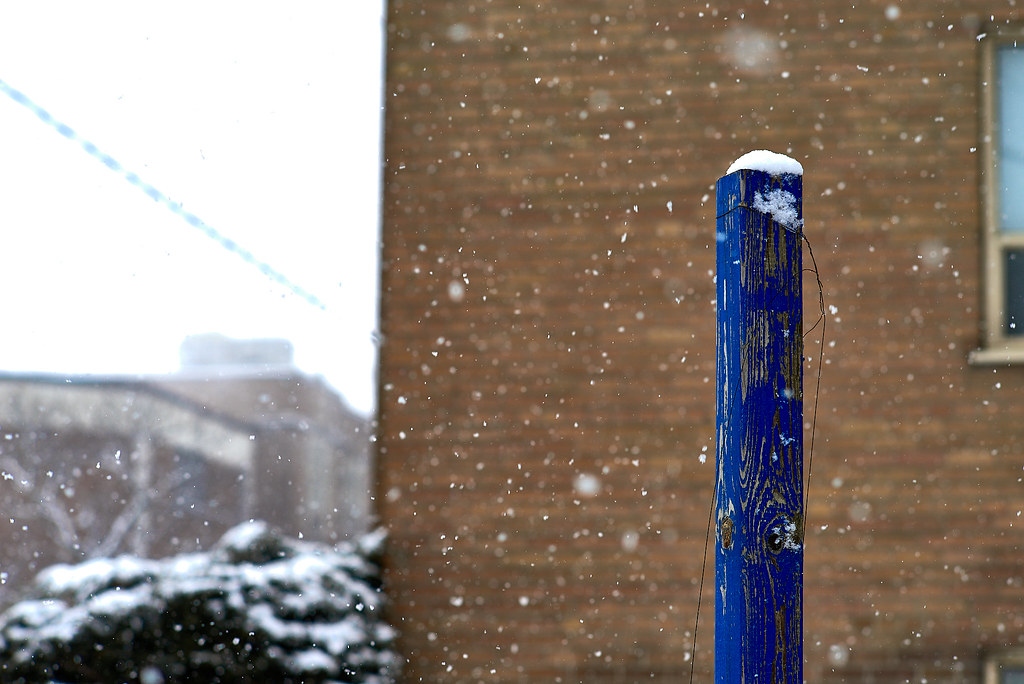
Blue and Snow 

Nikon D800, Nikkor 105mm f2.5

One of my challenges around gear is conflicting philosophies about it.

One one hand I like a setup where I can just grab & go, everything works together and I have exactly what I need in the bag at all times. This is the desire that pushed me into selling my first X-T1 and going Olympus, and why I bought Fuji in the first place.

On the other hand I love neat & odd gear and old lenses. This is why I end up buying into Sony and Nikon mounts.

The challenge is that I can only readily do one of these. Either I have a single consistent kit, or I have a bag full of odd glass that leaves me hauling pounds of gear but having fun buying & shooting weird stuff.

Historically, getting the odd stuff has always meant vintage SLR lenses for me. I think the recent explosion of interesting 3rd party manual glass in mirrorless mounts can readily replace that.

The question then becomes what happens to my Nikon kit. Short term that's nothing, I'll keep it around. But I can see the day coming where I dump the wide & normal stuff for a single mirrorless mount. Only time will tell if that mount is X mount, but it's likely.


Monday, 10 August 2020

Remembering My Forgotten Gear

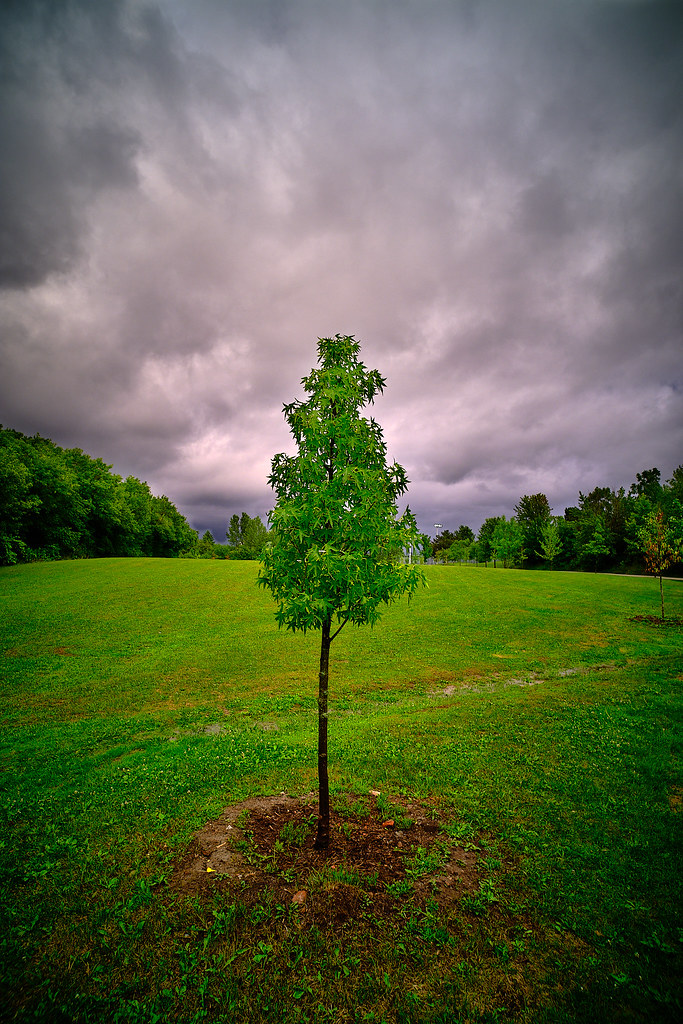
Tree in the Storm 

Fujifilm X-T2, 7Artisans 12mm f2.8


Yesterday's post on my experiences with adapting lenses, and especially the frustrations of adapting older wides on APS-C inspired me to take the recently-neglected X-T1 out, along with my Nikkor 24/2.8 K and Super-Takumar 35/3.5 and do some shooting.

This reminded me just how good these lenses actually are, even if the maximum aperture is pedestrian. The handling is also pretty good. While these lenses are a fair bit larger than the native Fuji X options I have, they're still not so large or heavy that they handle poorly on the X-T1.

I didn't come back with too much, the light was honestly lousy even by noonday standards and while I took around 50 shots, only a couple were really usable.

I do have to shoot some more with these lenses. The 24 is frankly better in all regards except speed, size and MFD than the Neewer 25mm f1.8, and it's pretty close on MFD, with its 0.3m MFD. Hmm, maybe I need to find a 28/2.8 AI-S, which focuses to 0.2m and is legendary in its close focus performance...